Table of Contents
Today, I’m heading to Bukchon. Bukchon is a neighborhood known for its traditional hanok village and concentration of art museums. It lies between Gyeongbokgung Palace to the west and Changdeokgung Palace to the east.
Seochon is called “Seochon” because it is located west of Gyeongbokgung Palace. Strangely enough, however, the neighborhood directly opposite it isn’t called Dongchon.
There actually was a place called Dongchon during the Joseon Dynasty. There were Dongchon, Seochon, Namchon, and Bukchon, with Dongchon referring to the area around Naksan Mountain.
Bukchon got its name because the neighborhood between Changdeokgung and Gyeongbokgung was located north of Jongno and Cheonggyecheon.
The names aren’t particularly intuitive since some areas are named in relation to Gyeongbokgung while others are based on different reference points. Still, if Bukchon Hanok Village had been called Dongchon Hanok Village, I suppose that would have felt just as strange in its own way.
Here is the walking route:
1. Anguk Station Exit 3 -> Bukchon Cultural Center (Gyedong-gil) -> Roh Moo-hyun Center (Changdeokgung-gil) -> Jongno-gu Ko Hui-dong Art Museum
2. Baek In-je House -> Jeongdok Public Library -> Bukchon Museum of Oriental Culture -> Gahoe-dong 31 -> National Museum of Modern and Contemporary Art, Seoul -> Kumho Museum of Art -> Open Songhyeon Green Plaza
You can download the Bukchon Route file and upload it to the Naver Map app using its GPX feature to view the walking route. (There are a few sections that aren’t supported on the map, so some parts differ slightly from the actual route.)
For music to listen to while walking, I chose Apoptosis by Inner Wave. If you like psychedelic or synthwave sounds such as those found in “One in a Million,” “June,” “Take 3,” and “Bones,” the whole album is worth a listen.
<a href=”https://open.spotify.com/album/5Kl37pew4uRgdOjttuQHSN?si=PcSTwpmQTtWjixzH6BRyzw” rel=”noopener noreferrer” target=”_blank”>Spotify</a> <a href=”https://music.apple.com/kr/album/apoptosis/1820521335” rel=”noopener noreferrer” target=”_blank”>Apple Music</a> <a href=”https://youtu.be/DTof1QBEJ_U?si=uer6F0Cxodd2mvbE” rel=”noopener noreferrer” target=”_blank”>YouTube Music</a>
Anguk Station
Route: Anguk Station Exit 3 -> Bukchon Cultural Center (Gyedong-gil) -> Roh Moo-hyun Center (Changdeokgung-gil) -> Jongno-gu Ko Hui-dong Art Museum
Anguk Station is the next stop after Gyeongbokgung Station on Line 3. If you’re coming from Sillim Station, you can get there in about 50 minutes with one transfer at either Euljiro 3-ga or Gyodae Station.
When you arrive, you’ll find a space that looks quite different from an ordinary subway station, much like at Gyeongbokgung Station.
The station was designated by the Seoul Metropolitan Government as an Independence Movement-themed station to commemorate the 100th anniversary of the March 1st Movement (March 1, 1919 ~ March 1, 2019).
On the way from the platform up to the concourse, there is a “100 Years Stairway.” The walls and ceiling feature a design inspired by the consonants and vowels from the Korean Declaration of Independence, depicted as if they are rising toward the sky and giving off light.

At the top of the 100 Years Stairway, there is a timeline of Korea’s independence movement on the left. On the right, there is a display covering 100 years of constitutional history, from the Provisional Charter of the Republic of Korea to the first Constitution, along with a blue map of the March 1st Movement.
The March 1st Movement can be seen as one of the starting points of modern Korean history. It led to the establishment of the Provisional Government of the Republic of Korea, whose constitutional documents, proclaimed in Shanghai, officially used the name “Republic of Korea” for the first time and defined the country as a democratic republic.
Later, the Constitution promulgated on July 17, 1948 explicitly stated that it inherited the spirit of independence embodied in the March 1st Movement and the legal legitimacy of the Provisional Government. This established a historical continuity that has carried on for well over a century.
Anguk Station seems to have been developed as an Independence Movement-themed station because it serves as a hub connecting several important sites related to the March 1st Movement.


After looking at the history of the Constitution and the blue map of the March 1st Movement, I headed toward Exit 3. Along the way, there is a space called the “100 Years Pillars” and the “100 Years Charging Station,” featuring the faces of 800 people.
The pillar lights up anew every 100 seconds, illuminating people who participated in the independence movement. The 100 Years Charging Station has 28 outlets.

It was a chance to look back on Korean history, even if only briefly, for the first time in a while. I found myself wondering if there is another country with a history as tragic and dramatic as ours.
Route: Anguk Station Exit 3 -> Bukchon Cultural Center (Gyedong-gil) -> Roh Moo-hyun Center (Changdeokgung-gil) -> Jongno-gu Ko Hui-dong Art Museum
After exiting Exit 3 and walking straight ahead, you’ll reach Gyedong-gil, where Hyundai E&C’s headquarters and Cafe Onion are located.
Walk a little farther along Gyedong-gil and you’ll see the Bukchon Cultural Center.
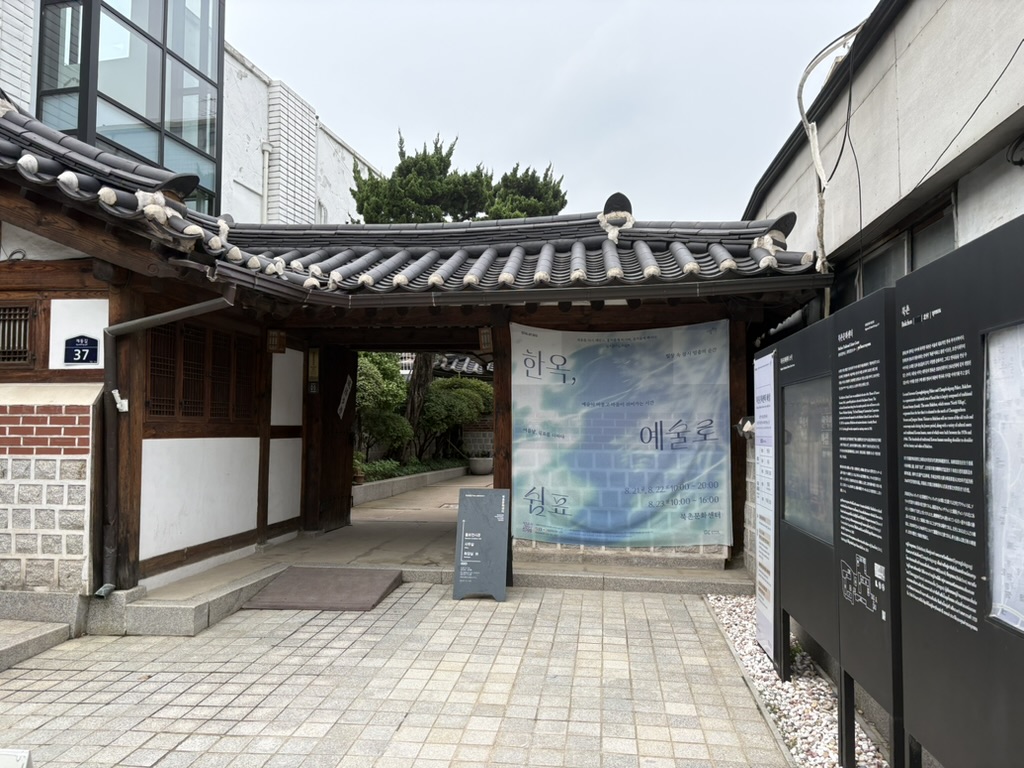
The center introduces the history of Bukchon Hanok Village and offers various hands-on programs. You can also step inside a traditional hanok.
They also distribute guide maps called “Bukchon Walks and Alley Tours,” which are useful when exploring Bukchon, Insadong, and the area around Jongmyo Shrine.
I took off my shoes and stepped inside the hanok. The combination of wood and hanji, along with the curved roof eaves, creates a peaceful atmosphere.
I imagined lying flat on my back and taking an afternoon nap, or sitting on the wooden floor on a midsummer day and happily eating watermelon cut up by my grandmother.

A pigeon was sitting quietly on top of a stone jar filled with water in the corner.
Or was it really sitting? I’ve seen birds crouching, but I don’t think I’ve ever seen one actually sit like this. I guess birds can’t sit cross-legged.
At first, I thought it was a model, but after seeing it occasionally drink water, I realized it was alive.

From the Bukchon Cultural Center, I set off on the main part of the walk. Just as Jahamun-ro divides Seochon into eastern and western sides, Bukchon-ro divides Bukchon into east and west.
The left side of Bukchon-ro is closer to Gyeongbokgung Palace, while the right side is closer to Changdeokgung Palace. I’ll start with the side closer to Changdeokgung.
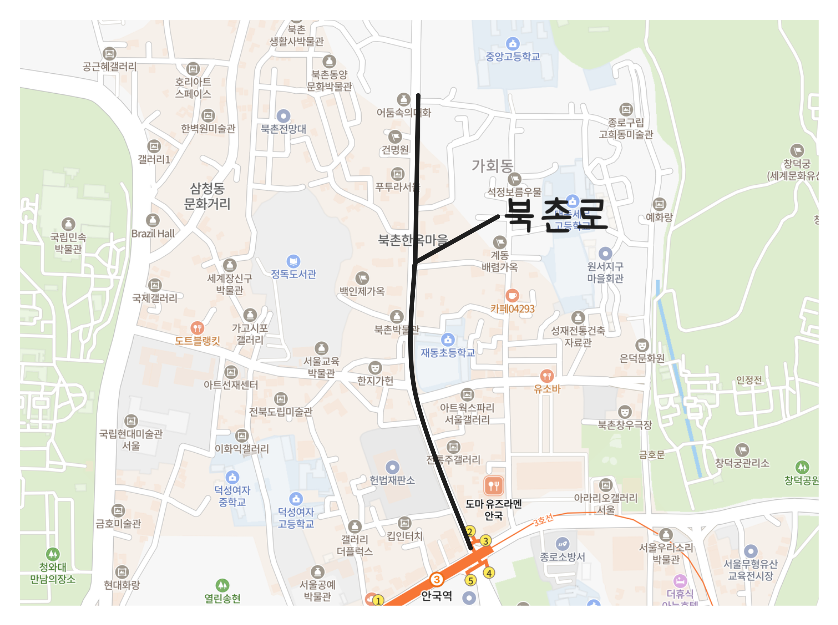
Near Changdeokgung Palace
Route: Anguk Station Exit 3 -> Bukchon Cultural Center (Gyedong-gil) -> Roh Moo-hyun Center (Changdeokgung-gil) -> Jongno-gu Ko Hui-dong Art Museum
Heading toward Changdeokgung-gil from the Bukchon Cultural Center, you’ll come across a view of Changdeokgung Palace, the first of Bukchon’s Eight Scenic Views.
The day was cloudy, but I could still see the scenery created by Injeongjeon Hall, the stone walls, and the trees of Changdeokgung.


Walking along the stone wall of Changdeokgung, I came across the Roh Moo-hyun Center.
I had heard the name before, but I didn’t know it was located here. Unless you specifically search for it, you wouldn’t know it was here even if you zoomed in on Naver Map, since it doesn’t appear on the map.
It felt nice to stumble upon a place worth visiting while simply walking down the street.
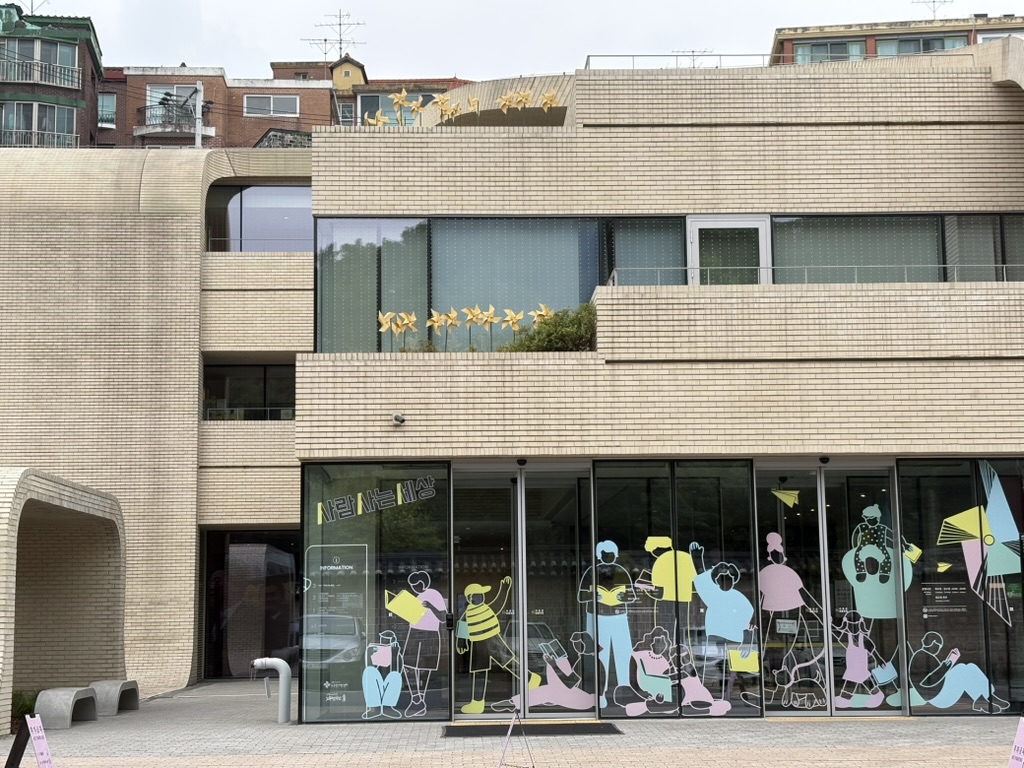
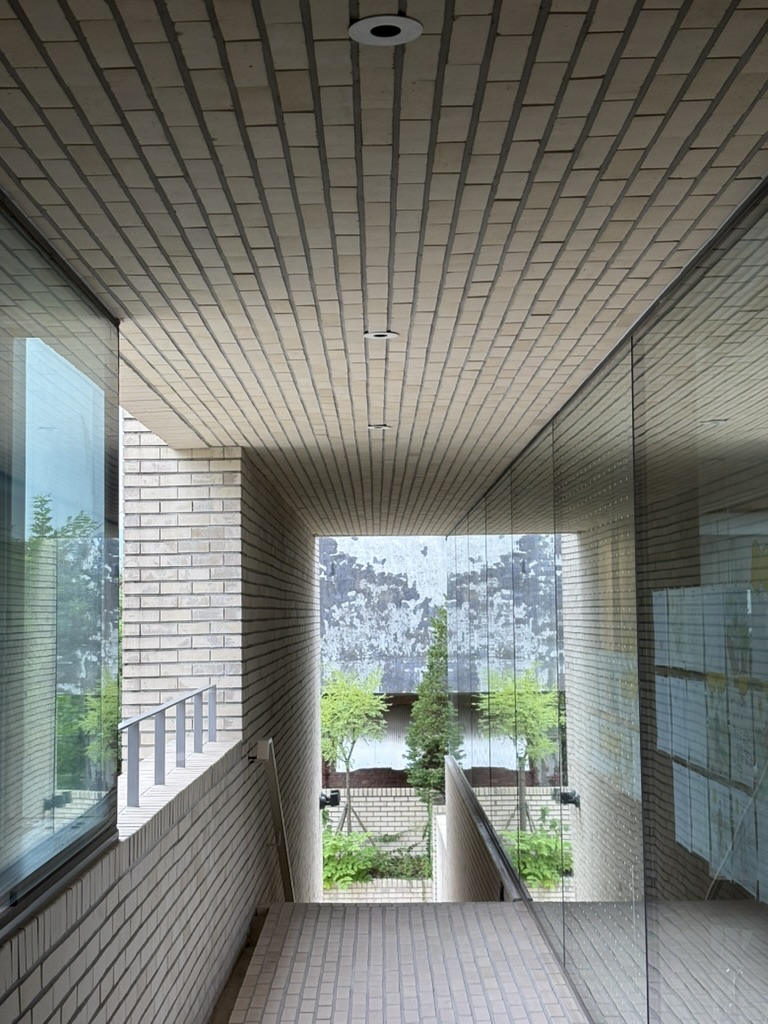
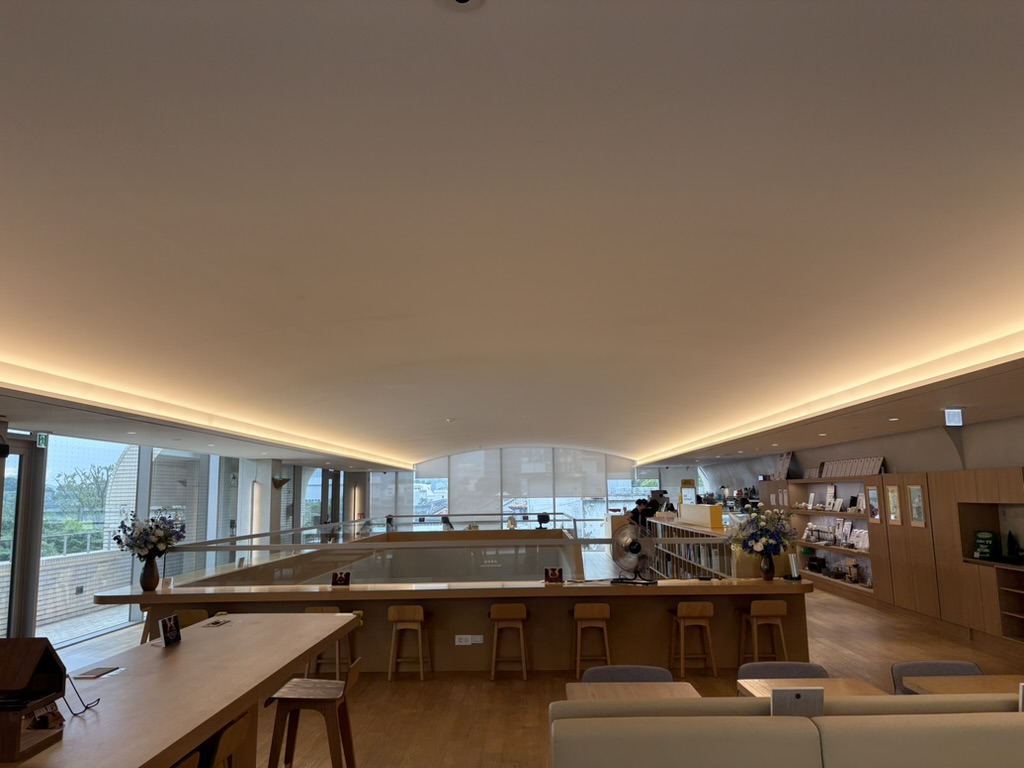
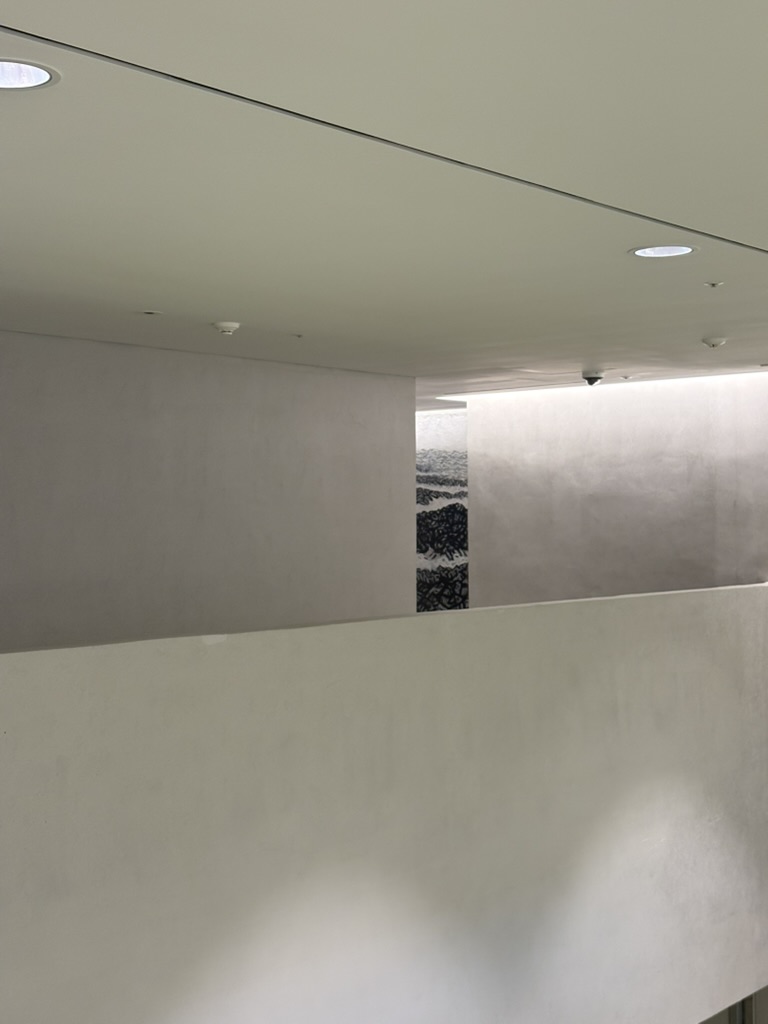
The building was established by the Roh Moo-hyun Foundation and spans from two basement levels to the third floor. It offers a variety of spaces, including a memorial area, multipurpose hall, café, and library.
Regardless of politics, if you enjoy looking around interesting buildings, it’s worth visiting at least once. The exterior, interior, and balconies are all thoughtfully designed.
It’s also a decent place to read or work on a laptop. Admission is free, so there’s no pressure to spend money.
Route: Anguk Station Exit 3 -> Bukchon Cultural Center (Gyedong-gil) -> Roh Moo-hyun Center (Changdeokgung-gil) -> Jongno-gu Ko Hui-dong Art Museum
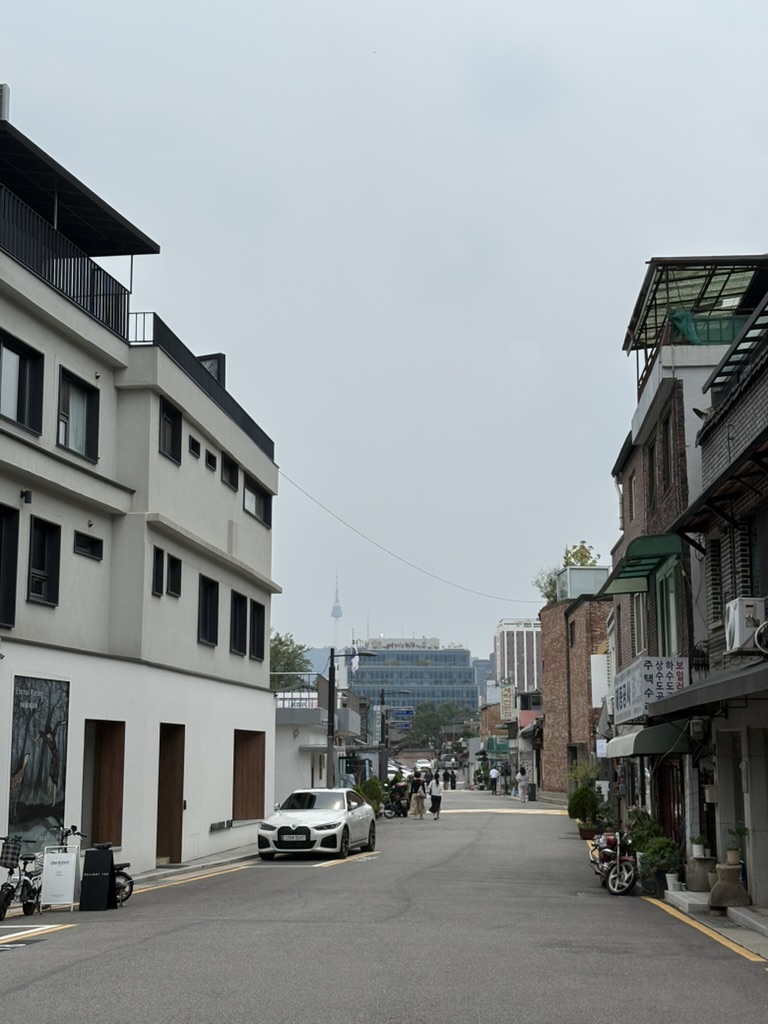
From the Roh Moo-hyun Center, I headed toward the Jongno-gu Ko Hui-dong Art Museum. I spotted Namsan Seoul Tower along the way and stopped to take a picture.
There are no utility poles along Changdeokgung-gil, perhaps because all the power lines have been moved underground. Maybe that’s why I didn’t see any pigeons.
I arrived at the Jongno-gu Ko Hui-dong Art Museum. To commemorate its sixth anniversary since reopening, it was hosting an exhibition titled Evergreen: The Demeanor of a Nobleman.
The exhibition runs through December 27 this year, and admission is free.
The museum is closed every Monday, and the last admission is at 5:30 p.m.
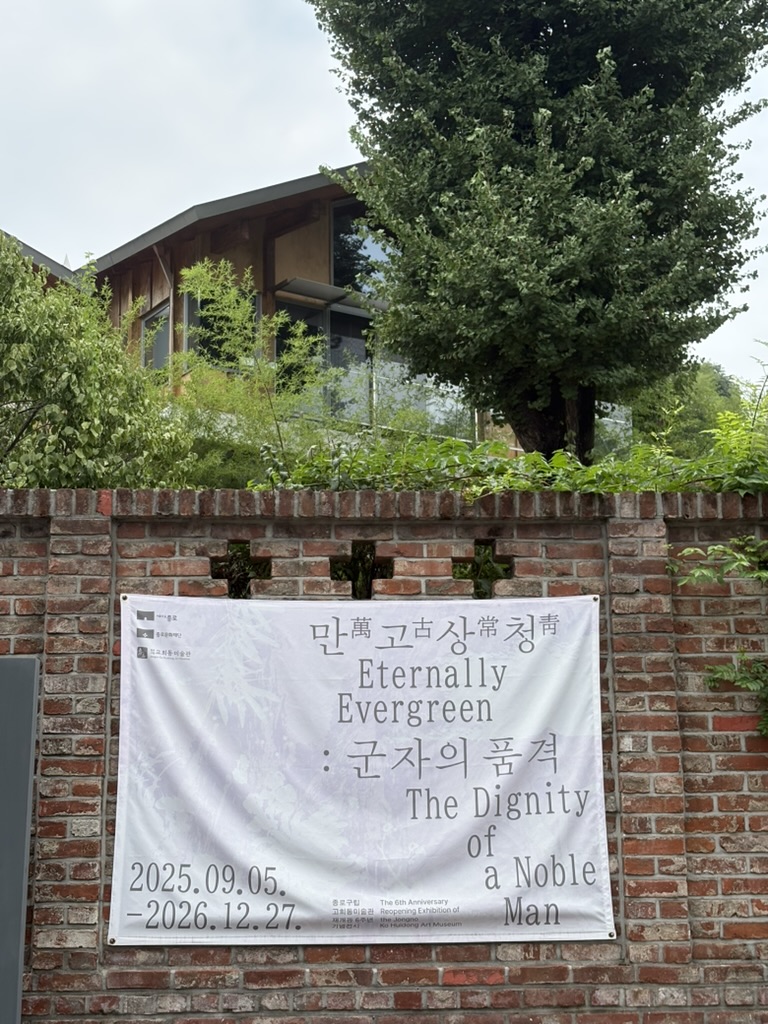
Like the Park No-soo Art Museum in Seochon, this museum operates out of a private residence. Without the exhibition sign shown above, you might simply walk past it.
The garden in front of the museum is covered with sand, with stones laid along the path leading inside.
Through the trees, you can see a bust of the artist Ko Hui-dong.
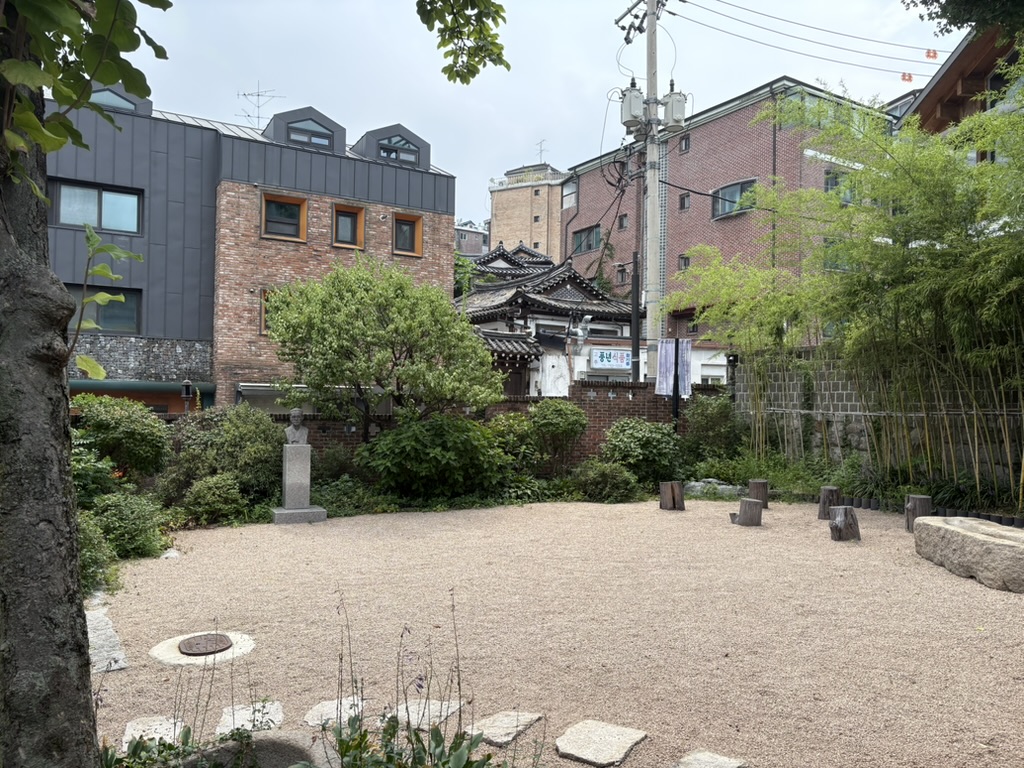
After returning from studying at the Tokyo School of Fine Arts (now Tokyo University of the Arts), the artist designed this house himself.
It is said to combine elements of traditional Korean hanok and Japanese houses, which may explain why the corridors are so narrow.
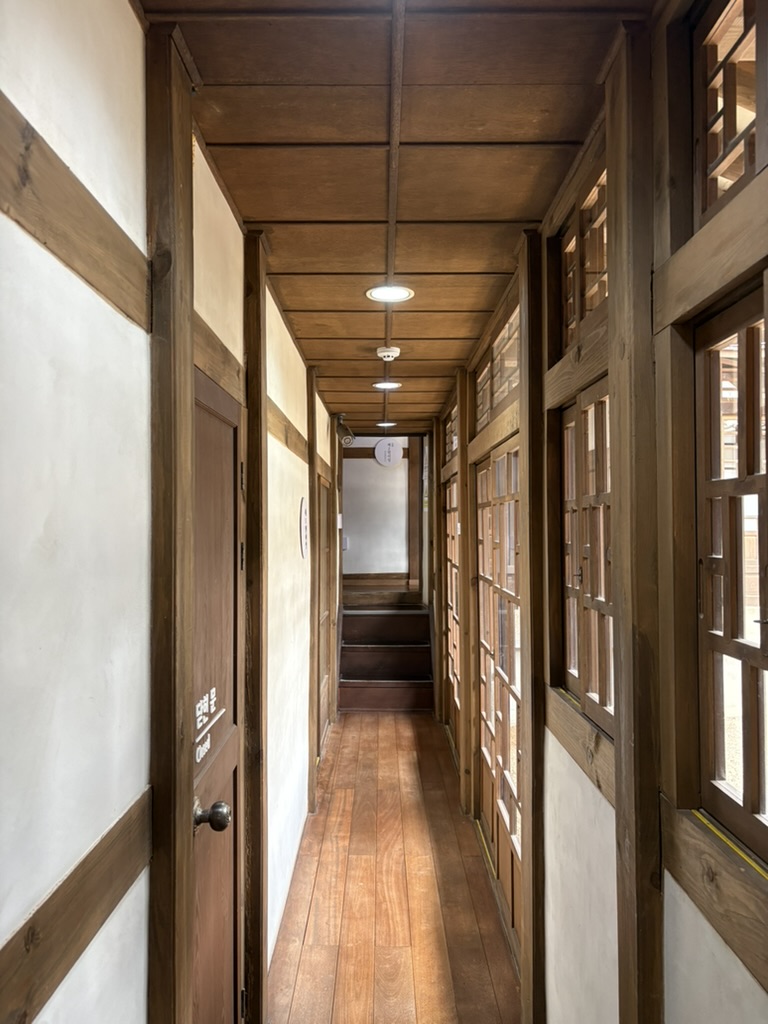
Ko Hui-dong was Korea’s first Western-style painter and the first president of the National Academy of Arts of the Republic of Korea. One of his students was the poet Yi Sang.
During my previous walk through Seochon, I had even gone looking for the house where Yi Sang lived. Knowing that Ko Hui-dong was his teacher somehow made it feel like I had run into someone I already knew. I guess connections really do matter.
The artist is said to have formed a group of Korean painters during the Japanese colonial period. One of the paintings they created together was Gunbangjajae. Ko Hui-dong painted the ink-covered rock on the far left.
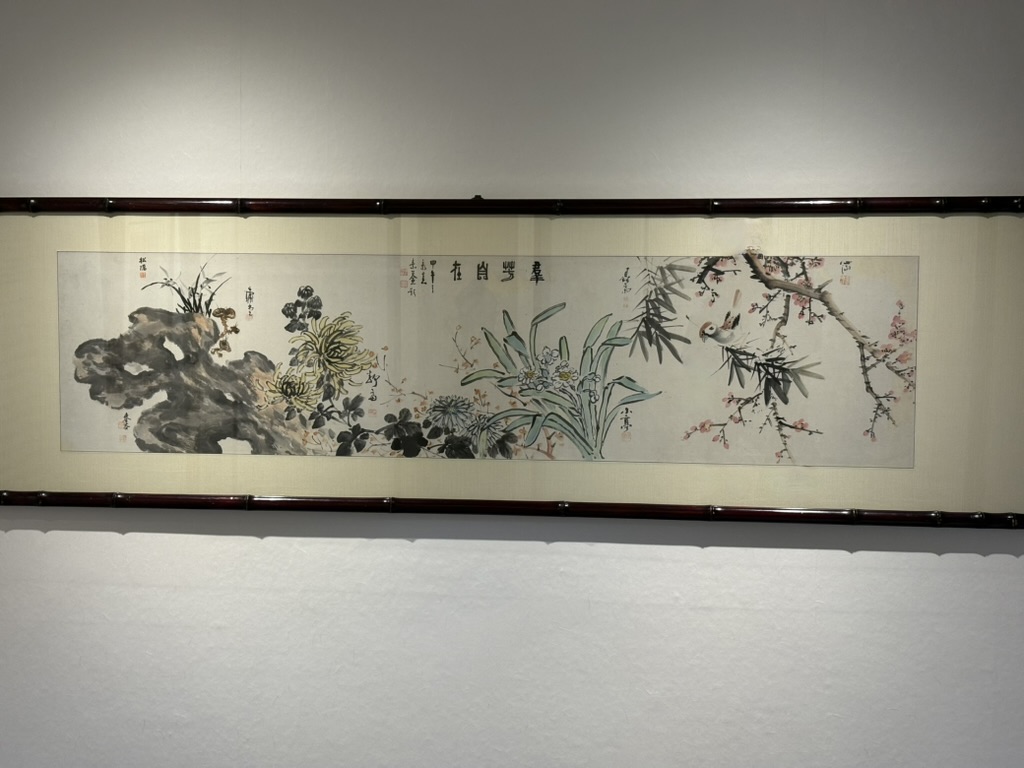
That wraps up the side of Bukchon closer to Changdeokgung. Now it’s time to cross Bukchon-ro and head toward the side closer to Gyeongbokgung.
After walking for a little while, I started getting hungry, so I stopped for a simple salmon rice bowl.
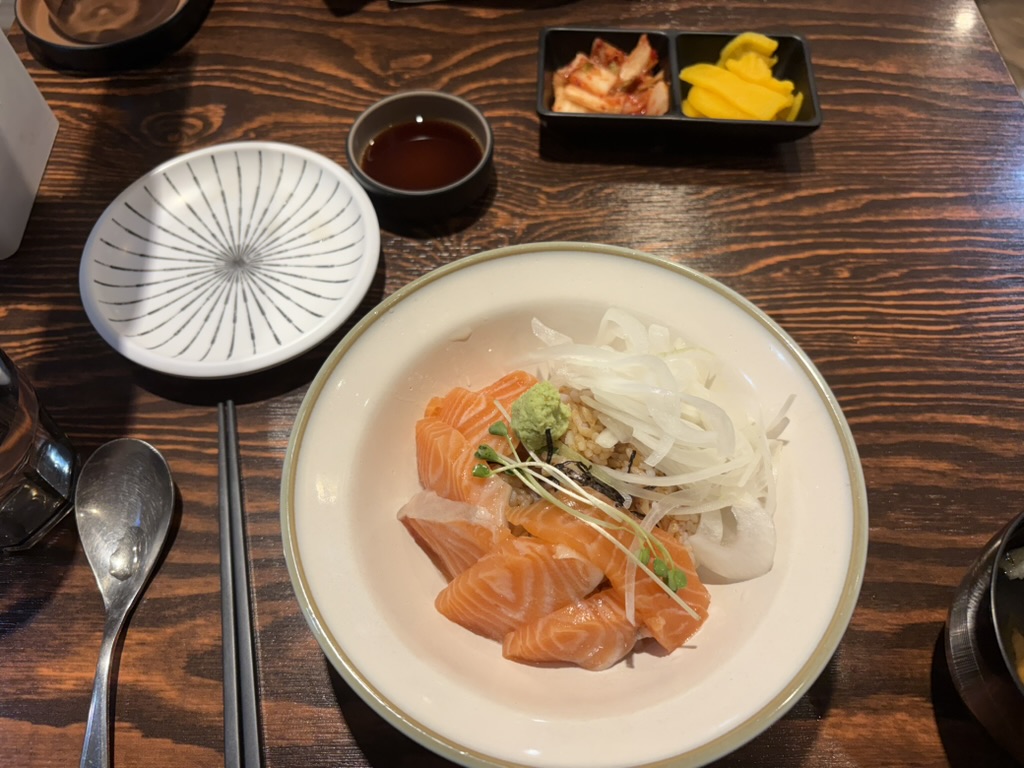
Near Gyeongbokgung Palace
Route: Baek In-je House -> Jeongdok Public Library -> Bukchon Museum of Oriental Culture -> Gahoe-dong 31 -> National Museum of Modern and Contemporary Art, Seoul -> Kumho Museum of Art -> Open Songhyeon Green Plaza
On the western side of Bukchon, my first stop was Baek In-je House. Baek In-je was an independence activist and the founder of Inje University’s Paik Nam-June? [This is kept close to the original wording.] Medical