Table of Contents
After Seochon and Bukchon, I wondered where I should go next. I decided on Jeong-dong, which lies between the two neighborhoods if you follow Sejong-daero all the way south.
The name Jeong-dong comes from Jeongneung, the tomb of Queen Sindeok, the second wife of King Taejo Yi Seong-gye. Administratively, the area belongs to Sogong-dong.
Some of the places I visited today, such as City Hall Station and the Seoul Museum of Art, are technically outside Jeong-dong. For convenience, however, I have grouped the surrounding area together as Jeong-dong.
Walking Route
- City Hall Station Exit 12 → Deoksugung Palace’s Seokjojeon, Dondeokjeon, National Museum of Modern and Contemporary Art → Seoul City Hall Seosomun Building → Seoul Museum of Art → Jeongdong-gil → Pai Chai University History Museum → Deoksugung Palace’s Jungmyeongjeon → Gojong’s Road → Former Russian Legation → Cecilmaru Observatory at Jeongdong Theater
- Seoul Plaza → Seoul City Hall Sky Observatory, Sky Square Gallery, My Seoul → Wongudan
Instead of an album, I picked out a few individual songs for today’s walk. One of them was Mac DeMarco’s Chamber of Reflection. I still haven’t listened to the entire album that this song is from.
Spotify Apple Music</a> YouTube Music</a>
I divided the area into two sections along Sejong-daero: Deoksugung Palace on the left and Seoul City Hall’s main building on the right.
Jeong-dong looks smaller than Seochon and Bukchon because many of its attractions are concentrated in a relatively small area. But once you follow the walking route, you end up covering more ground than you might expect. According to my step-counting app, I walked about 4,000 more steps than I did in Bukchon.
Today, I’ll be visiting three observatories. Another point of this walk is seeing how different parts of Seoul look from each one.
City Hall Station
Route: [City Hall Station Exit 12] → Deoksugung Palace (Seokjojeon, Dondeokjeon, National Museum of Modern and Contemporary Art) → Seoul City Hall Seosomun Building → Seoul Museum of Art → Jeongdong-gil → Pai Chai University History Museum → Deoksugung Palace’s Jungmyeongjeon → Gojong’s Road → Former Russian Legation → Cecilmaru Observatory at Jeongdong Theater
City Hall Station is a transfer station for Lines 1 and 2. It is called City Hall Station because it is located in front of Seoul City Hall.
If I leave from Sillim Station, it takes about 30 minutes to get to City Hall Station without transferring.
Most of Line 2 doesn’t have themed stations like Anguk Station or Gyeongbokgung Station on Line 3. City Hall Station on Line 2 is one of the few exceptions. Its red brick walls and columns give the station a somewhat cozy atmosphere.
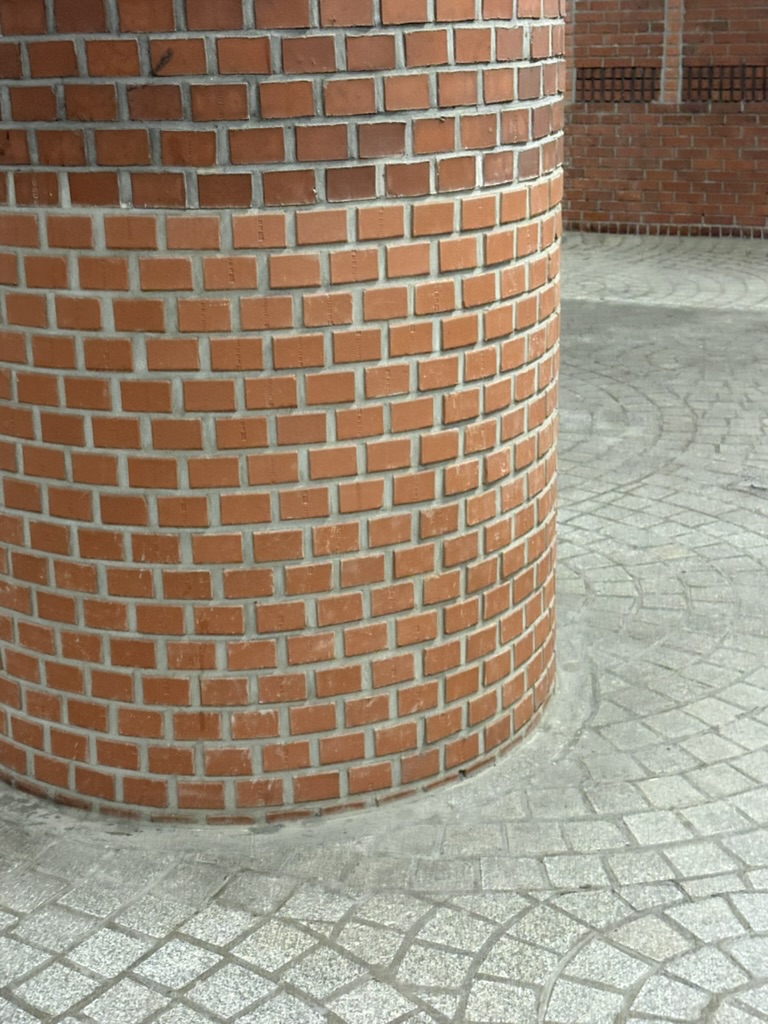
I left home rather late and didn’t have much time left before my reservation at Deoksugung Palace’s Seokjojeon. Without even having time to look around the area, I headed straight for Exit 12 and made my way to the palace.
Exits 2 and 3 are actually closer to Deoksugung Palace, but they are on the Line 1 side of the station. So, coming out through Exit 12 and walking from there is probably faster. (I think.)
Around Deoksugung Palace
I didn’t get a photo of Daehanmun, the main gate of Deoksugung Palace. After getting my ticket, I walked quickly toward Seokjojeon.
Admission to Deoksugung Palace is 1,000 won, and the palace is closed every Monday.
Route: City Hall Station Exit 12 → [Deoksugung Palace’s Seokjojeon], Dondeokjeon, National Museum of Modern and Contemporary Art → Seoul City Hall Seosomun Building → Seoul Museum of Art → Pai Chai University History Museum → Deoksugung Palace’s Jungmyeongjeon → Jeongdong-gil → Former Russian Legation → Gojong’s Road → Cecilmaru Observatory at Jeongdong Theater
To visit Deoksugung Palace’s Seokjojeon, you need to make a guided tour reservation through the Royal Palaces and Tombs Center website</a>.
Both general and in-depth tours are available. Today, I chose the 45-minute general tour.
Fortunately, I arrived just in time for my reservation. Before going inside, I took some photos because the palace and the crape myrtle in full bloom looked beautiful together.
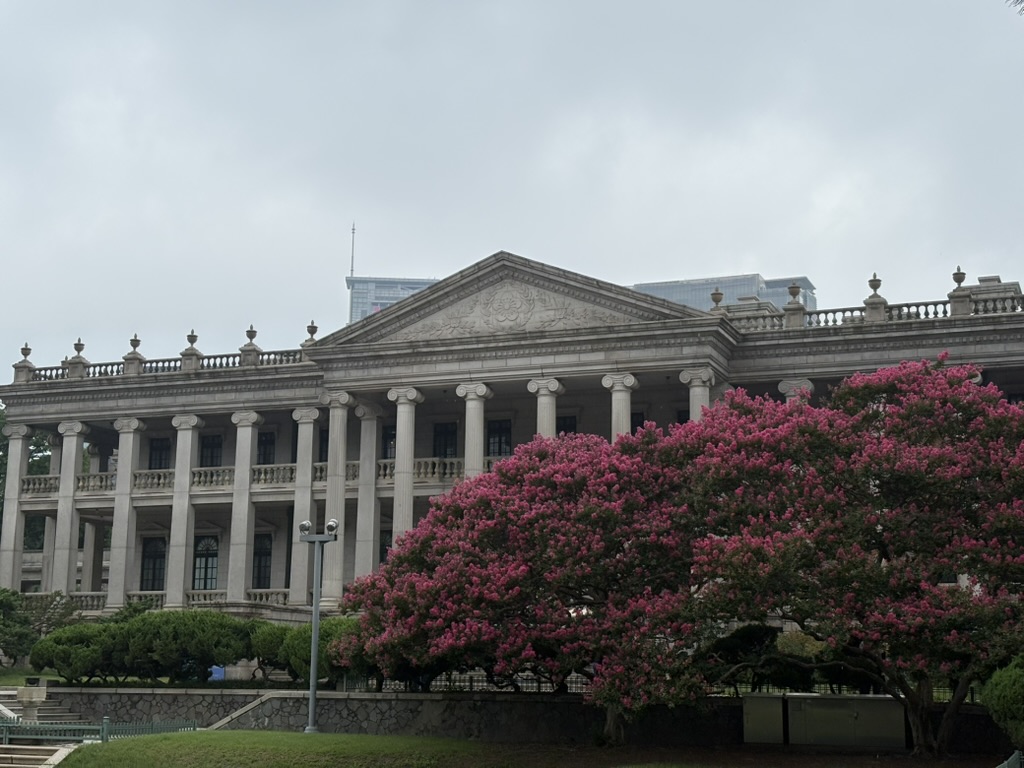
I walked around the interior of Seokjojeon with the other visitors who had reserved the tour, listening to the guide’s explanations.
Deoksugung Palace’s Seokjojeon was completed in December 1910. The Korea-Japan Annexation Treaty had already been signed before its completion, meaning that the building was completed after Korea had entered the period of Japanese colonial rule.
Over the years, the building was used as the Yi Royal Family Art Museum, a venue for the U.S.-Soviet Joint Commission, and the National Museum of Modern and Contemporary Art. It is now operated as the Daehan Empire History Museum.
As the first Western-style building in the Korean Empire, it was built in the Neoclassical palace style that was popular in Europe at the time. Just as the front of the building is symmetrical, the interior is also arranged with strict symmetry.
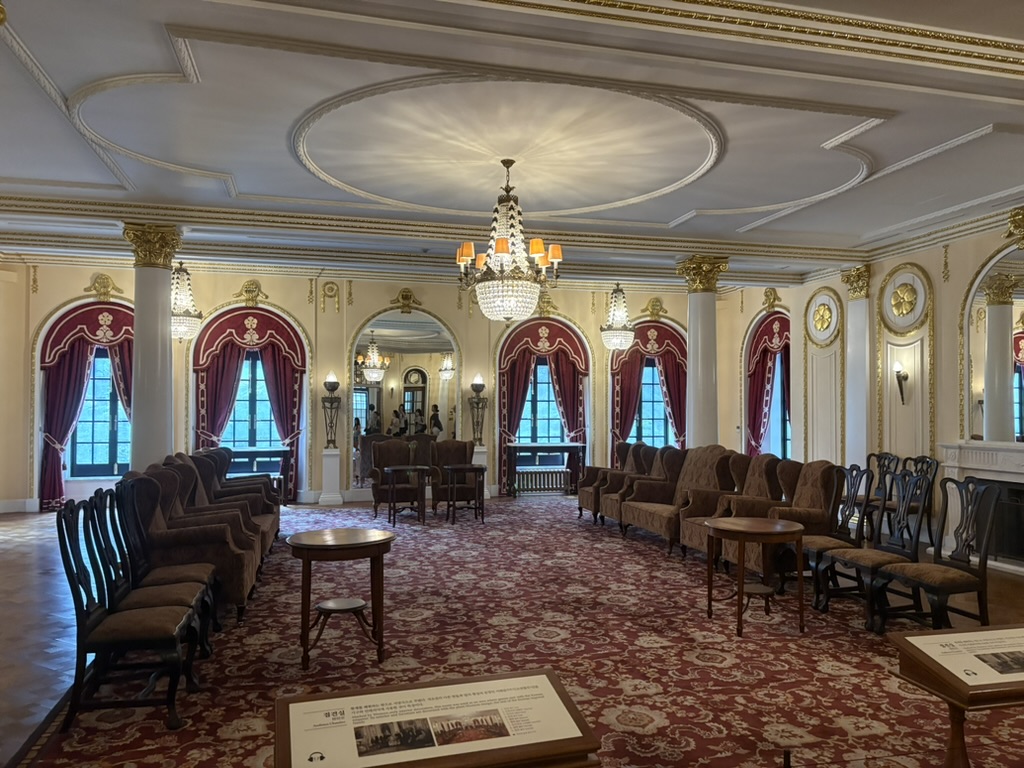
Walking around inside, you can really feel how strong that symmetry is.
The first floor was used as a workspace, while the second floor served as living quarters.;
The furniture and plants in the Empress’s sitting room on the second floor are quite elaborate. I actually liked this room more than the Emperor’s sitting room next door.
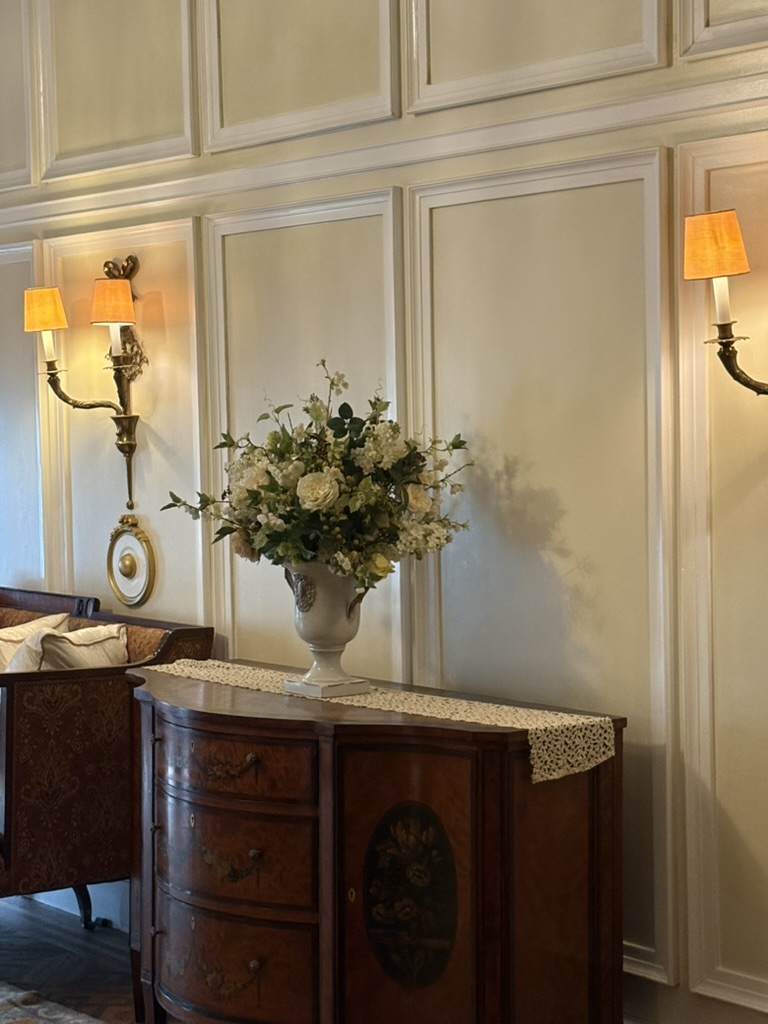
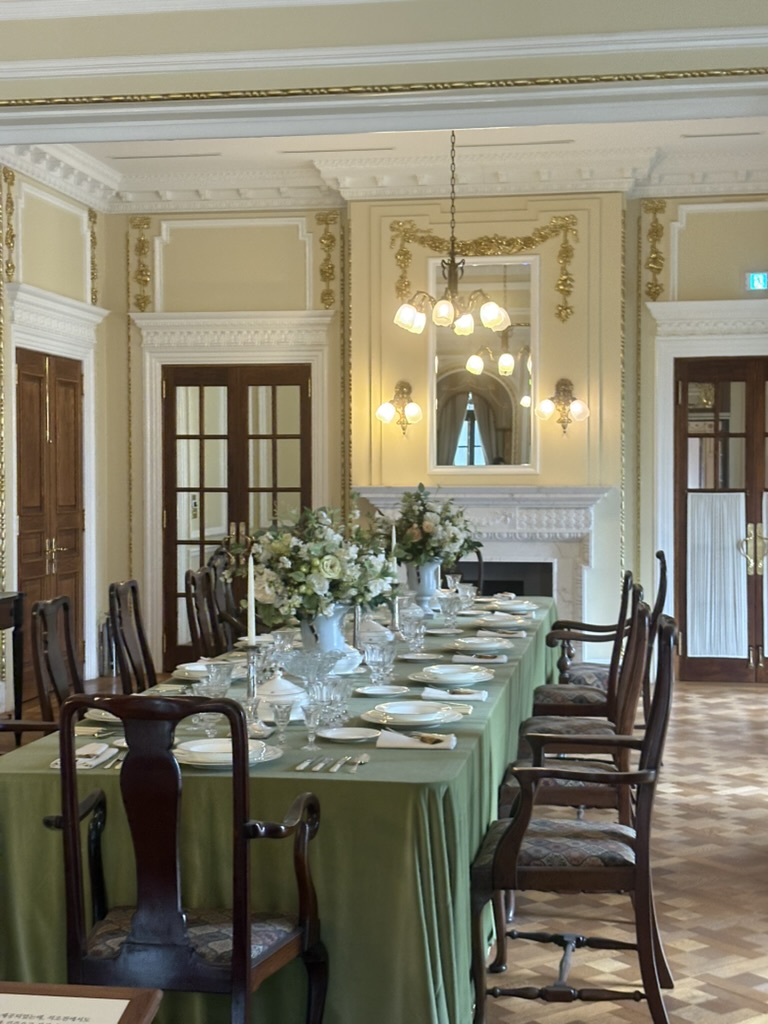
The grand dining room on the first floor is even more luxurious and ornate. I suppose that makes sense, since this was where banquets were held for guests.
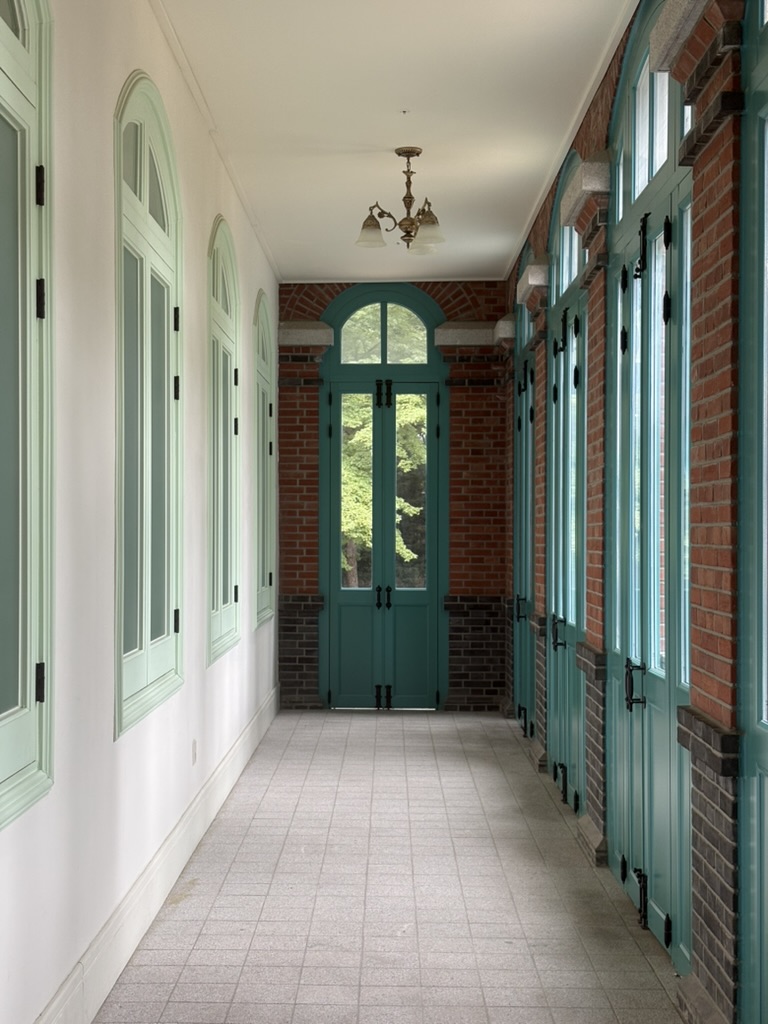
Here, the guide used a piece of frosted glass to show us the materials used inside Seokjojeon and explained that although the exterior is made of granite, the interior is made of brick.
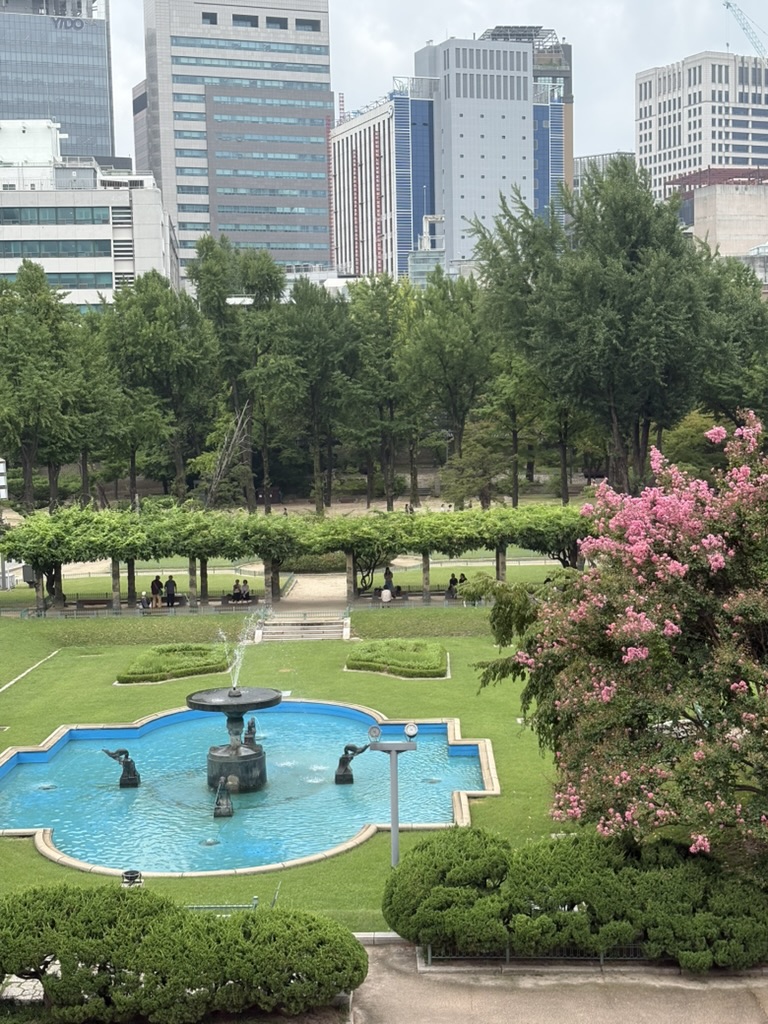
This is the garden as seen from the second-floor terrace. It went through several changes before taking on its current appearance.
The palace columns partially blocked the view, so the photo didn’t turn out quite as neatly as I had hoped.
City Hall Station Exit 12 → Deoksugung Palace’s Seokjojeon, [Dondeokjeon], National Museum of Modern and Contemporary Art → Seoul City Hall Seosomun Building → Seoul Museum of Art → Pai Chai University History Museum → Deoksugung Palace’s Jungmyeongjeon → Jeongdong-gil → Former Russian Legation → Gojong’s Road → Cecilmaru Observatory at Jeongdong Theater
After finishing the guided tour, I headed to Dondeokjeon behind Seokjojeon. It had been demolished in the past and was restored by the Cultural Heritage Administration before reopening in 2023.
It can be visited free of charge without a reservation. Dondeokjeon is prettier at night than during the day.
A special exhibition titled Banhwa, Auspicious Heart is currently being held to commemorate the 140th anniversary of diplomatic relations between Korea and France. It runs only until August 30 this year.

When you enter, you can choose one of three types of postcards.
After thinking about it for a moment, I chose the one with the most appealing flower-petal design.
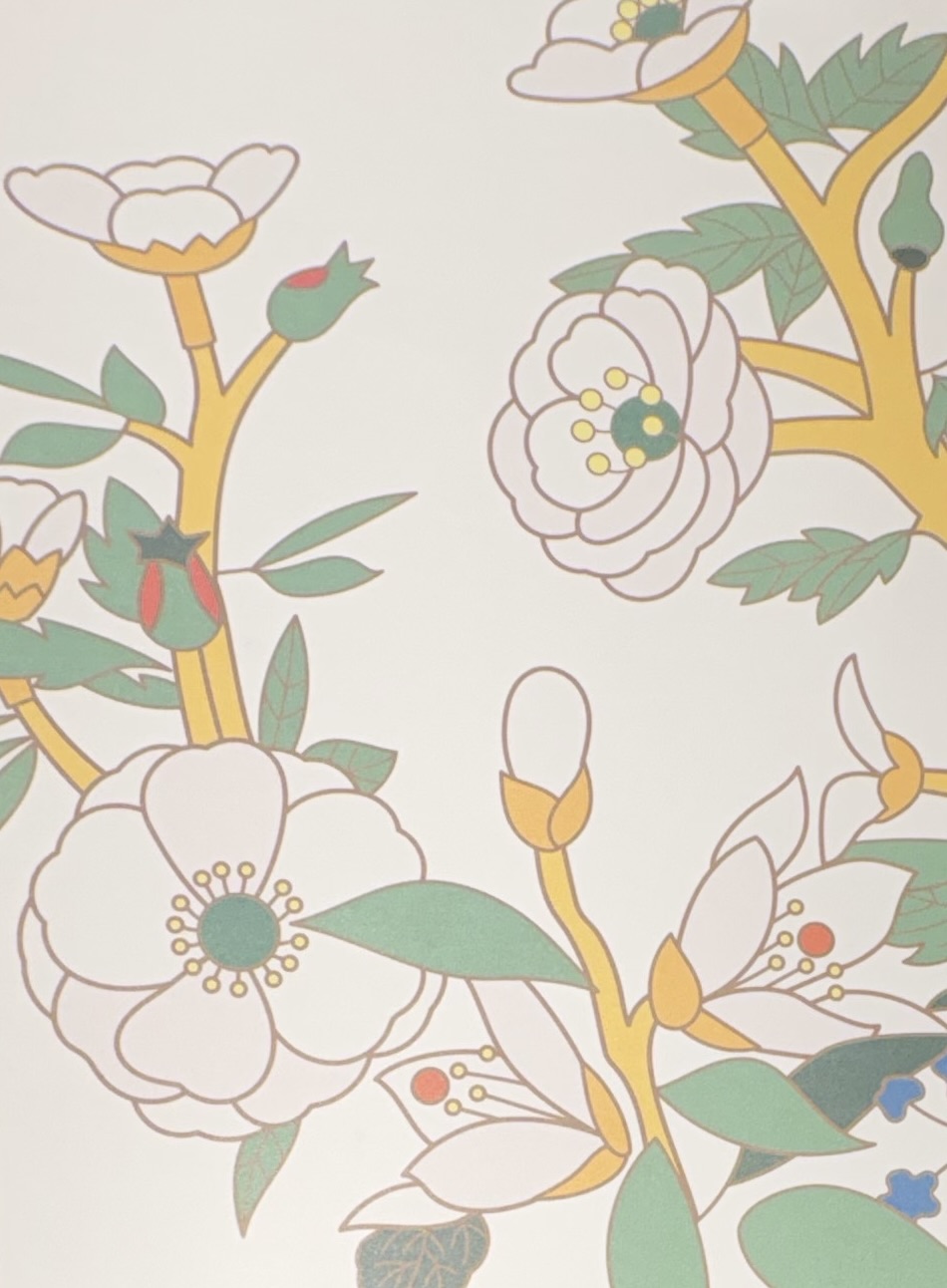
Banhwa refers to decorative objects made by adorning flowers or trees with jewels and metal ornaments.
The exhibition was held to commemorate the fact that King Gojong presented a banhwa to the French president as a gift celebrating the establishment of diplomatic relations.
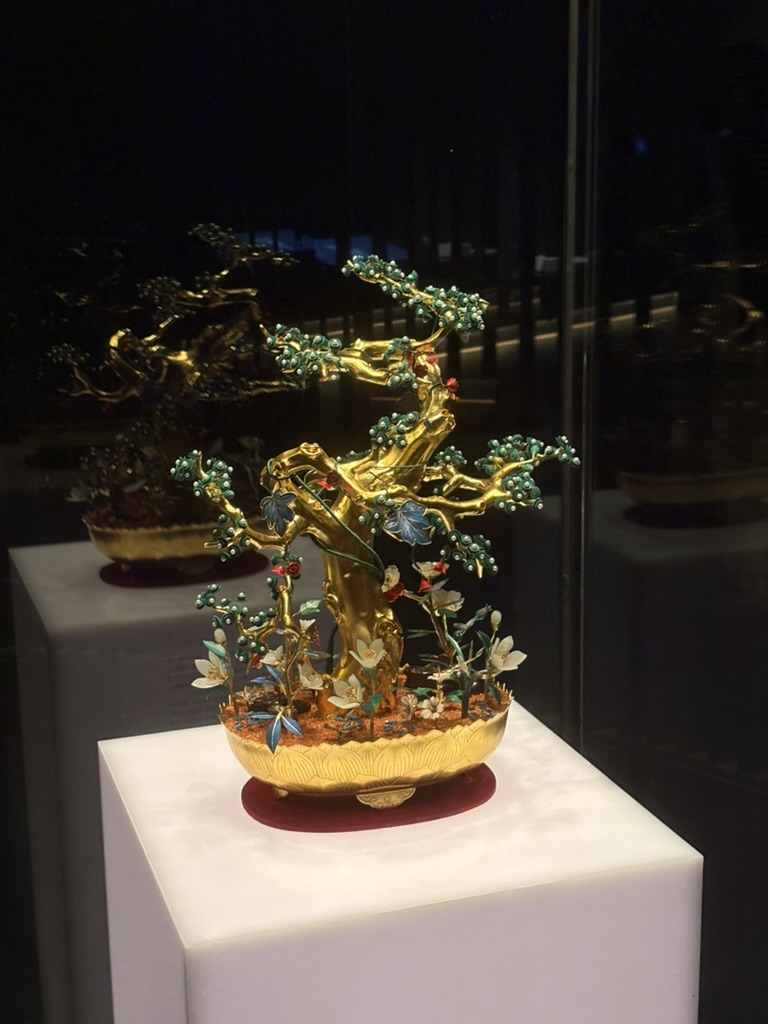
After taking a quick look around Dondeokjeon, I headed to the National Museum of Modern and Contemporary Art, Deoksugung, located right in front of it.
Route: City Hall Station Exit 12 → Deoksugung Palace’s Seokjojeon, Dondeokjeon, [National Museum of Modern and Contemporary Art] → Seoul City Hall Seosomun Building → Seoul Museum of Art → Pai Chai University History Museum → Deoksugung Palace’s Jungmyeongjeon → Jeongdong-gil → Former Russian Legation → Gojong’s Road → Cecilmaru Observatory at Jeongdong Theater
The exhibition Lee Dae-won: Nothing Makes You Sad is being held here until November 8 this year.
Before going inside, I took a photo of the crape myrtle in front of the museum. I liked the combination of the overcast sky and the deep pink flowers in full bloom.
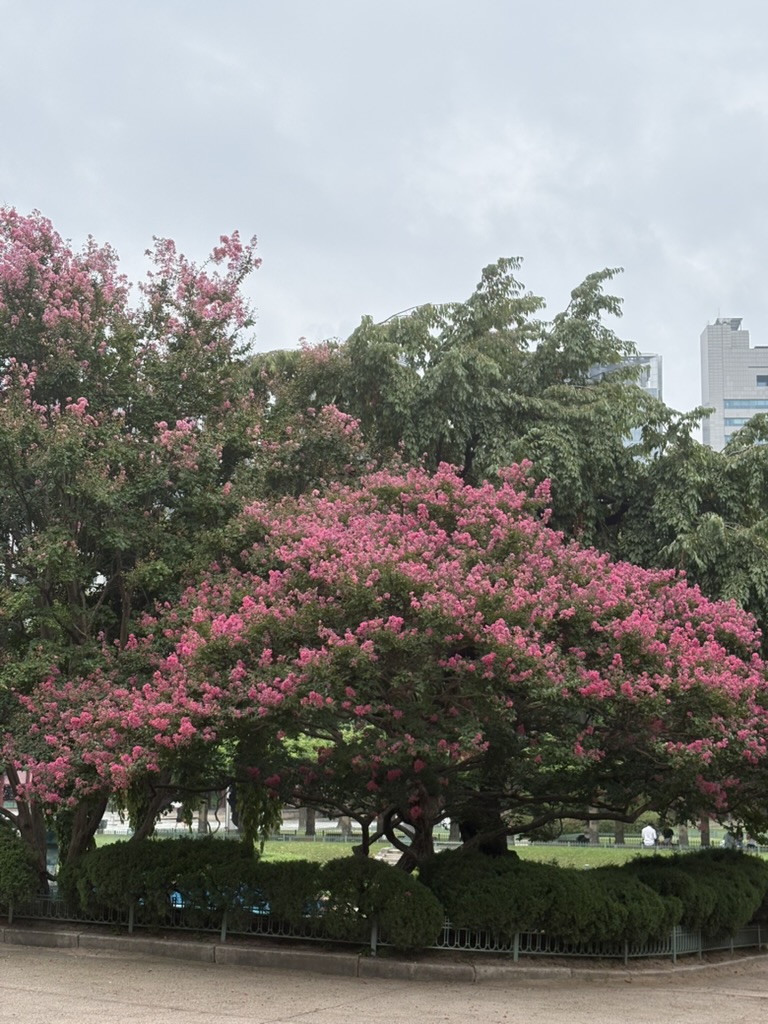
Admission to the National Museum of Modern and Contemporary Art, Deoksugung, is 2,000 won. I took my time looking through Lee Dae-won’s paintings.
The exhibition is divided into four sections according to different periods. The painting below depicts part of a wall and some ivy at the artist’s home in 1960.
I took a photo because I liked the texture, colors, and flat composition of the painting. This calm color palette would later transform into something much more vibrant.
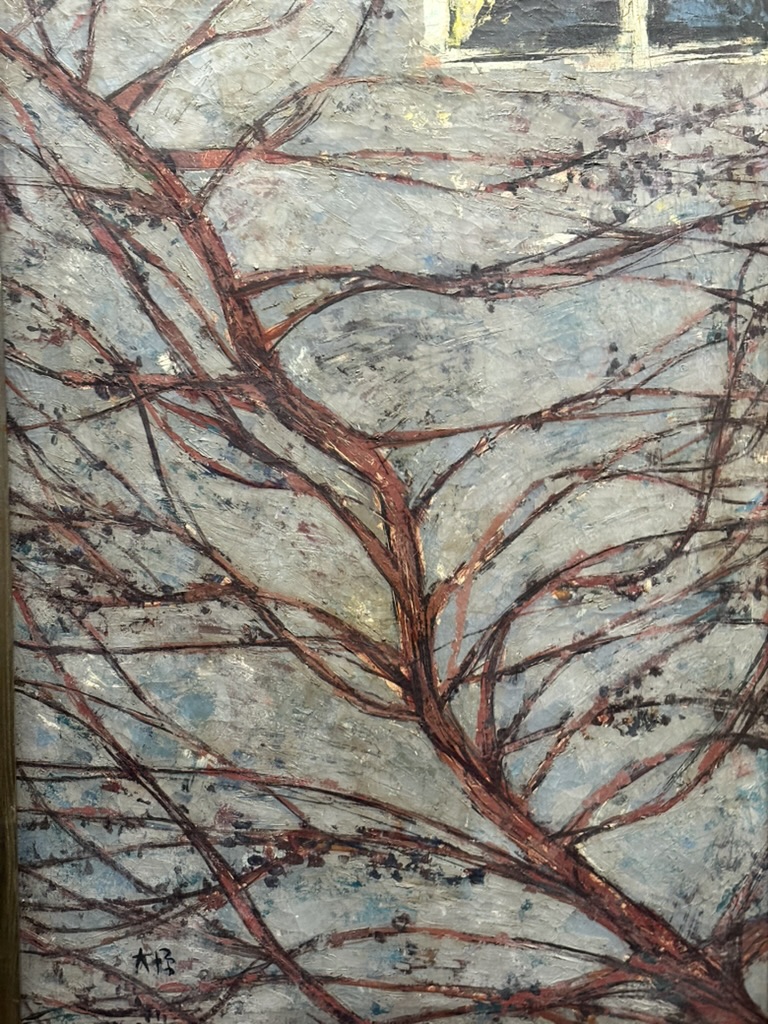
The title of this exhibition, Nothing Makes You Sad, is also the title of the final section.
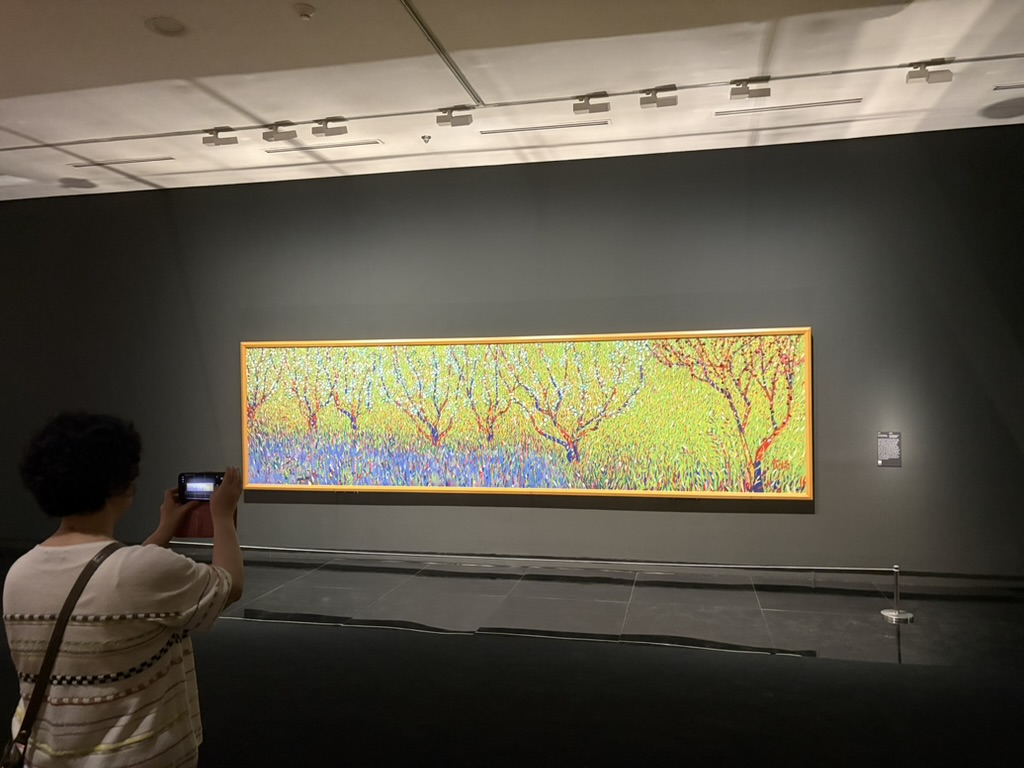
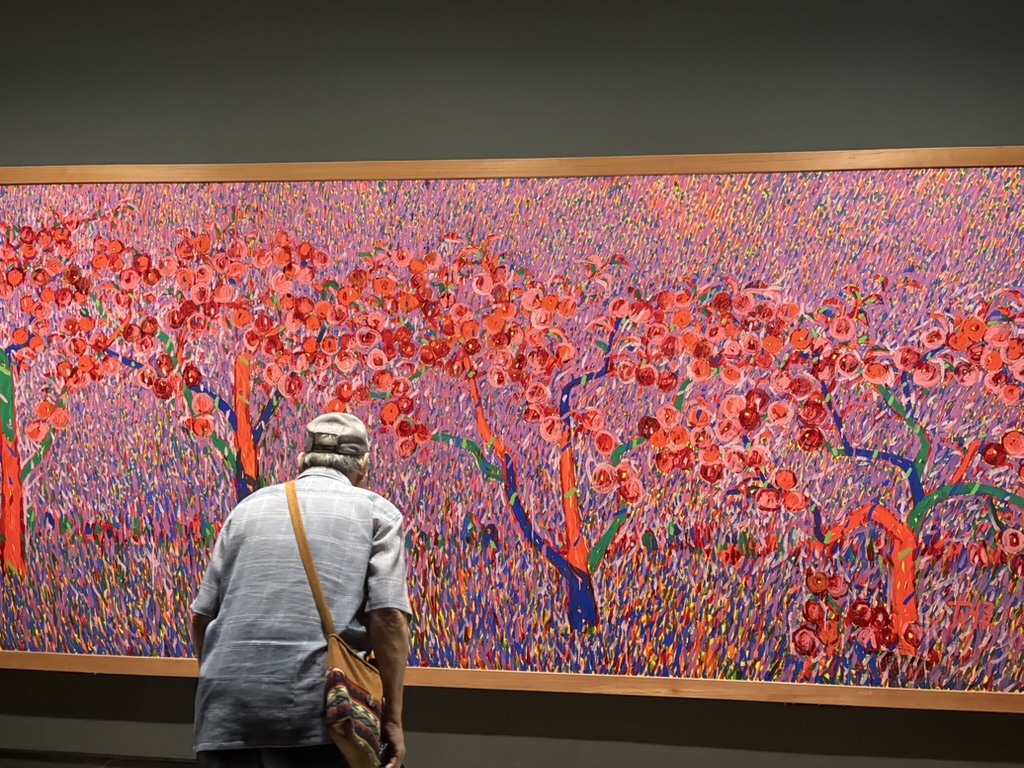
In his later years, Lee Dae-won painted mountains, apple trees, and fields in his hometown of Paju. He developed a broader and deeper approach to painting through a style that was distinctly his own.
One of the descriptions on the wall near the entrance said that viewers should feel as if they are not simply looking at a painting, but stepping inside it.
So I tried looking at the paintings while imagining myself actually walking around inside them.
In the painting below, I could see a field and tree branches swaying in the wind. As I walked around the exhibition and thought about that scene, it almost felt as though I could hear the sound of the wind.
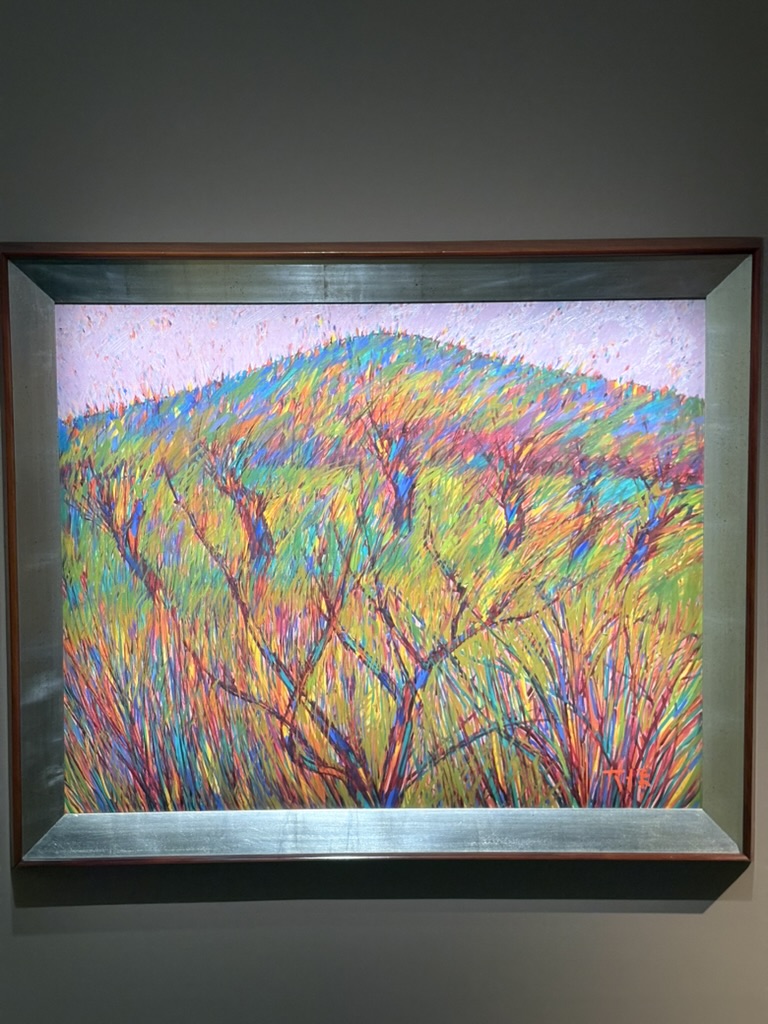
Even though it was Friday morning, the exhibition was crowded. There were far more people than usual, and visitors kept walking in front of the paintings.
So I changed my approach. Instead of trying to look at the paintings alone, I decided to watch the people and the paintings together.
There was something interesting about watching people trying to take photos or standing there, absorbed in the paintings.
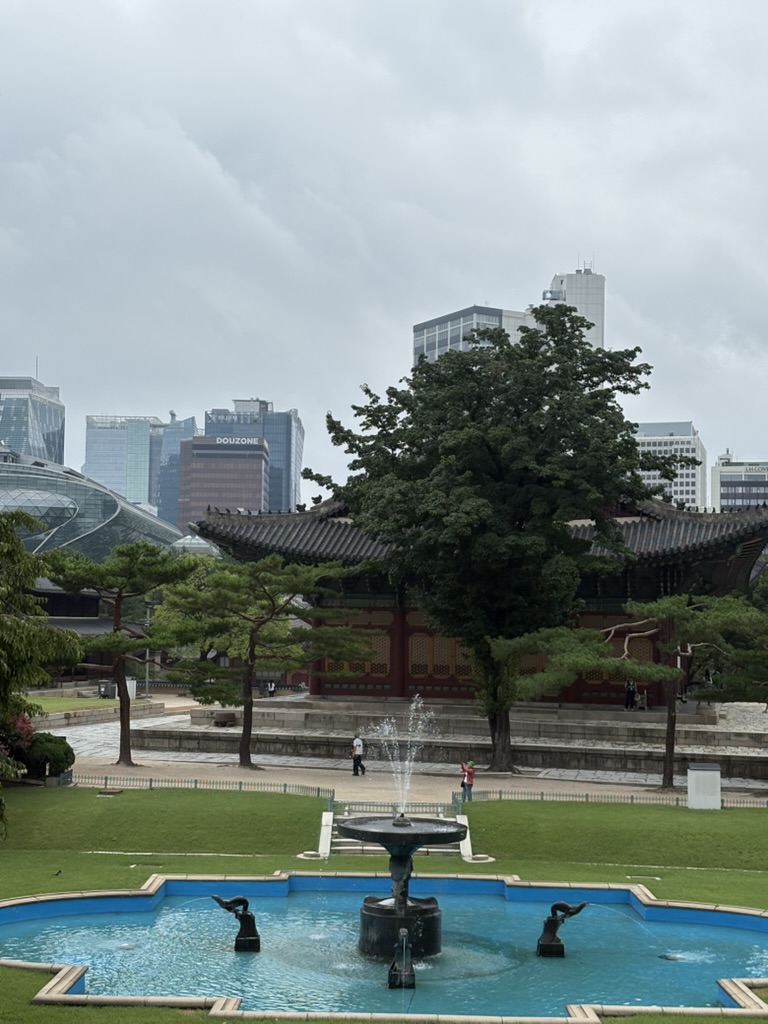
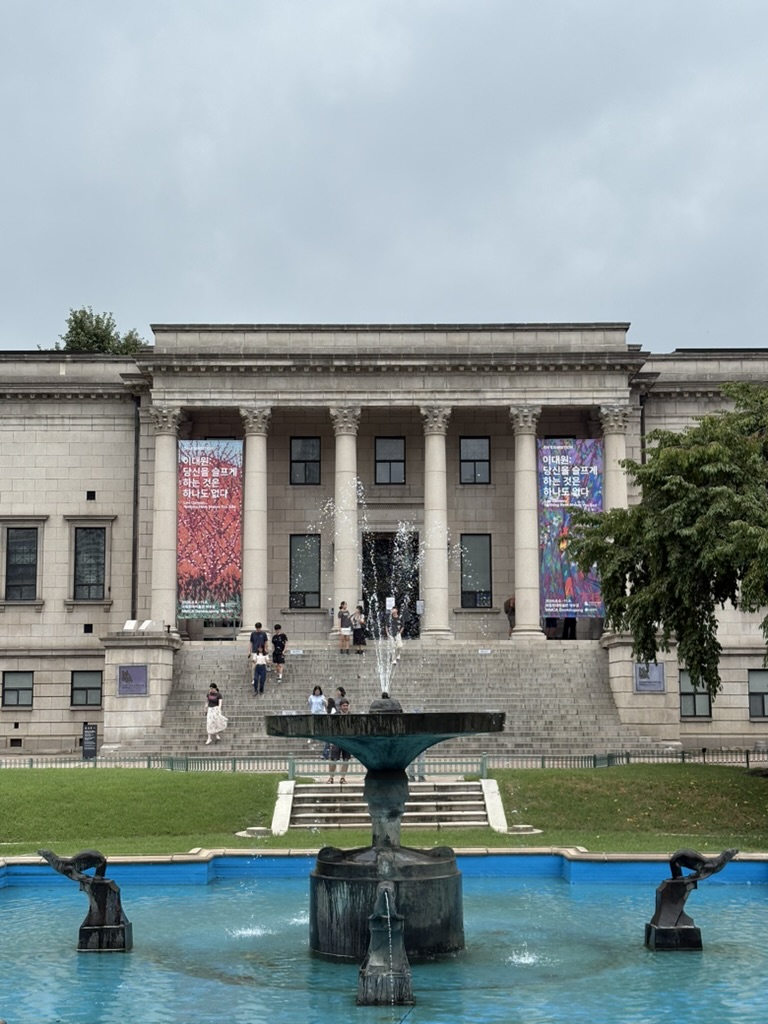
After leaving the exhibition hall, I took a photo of the fountain outside.
Beyond the garden, Jungwacheon Hall can be seen partially hidden behind the trees. Seoul City Hall is also visible on the left. I’ll head over there later and take another look at this area from the other side.
If you head back toward Dondeokjeon, where I was earlier, there is a walking path that runs along the outer edge of Deoksugung Palace.
On the way, I spotted a cat in the distance.
I guess cats live in Deoksugung Palace too.

It looked up, then made a little jump and headed into the bushes.
There’s no way I could just walk past it. I decided to approach the cat.
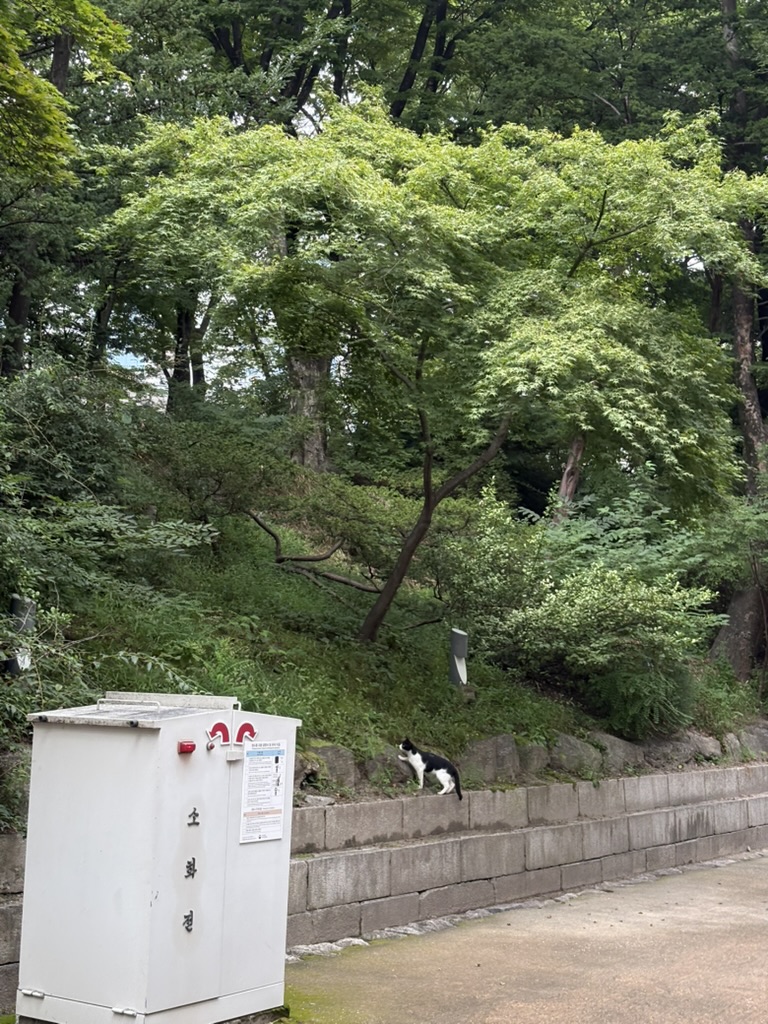
As I slowly approached, it became wary and stared straight at me.
It was a beautiful cat with a nice mix of black and white.
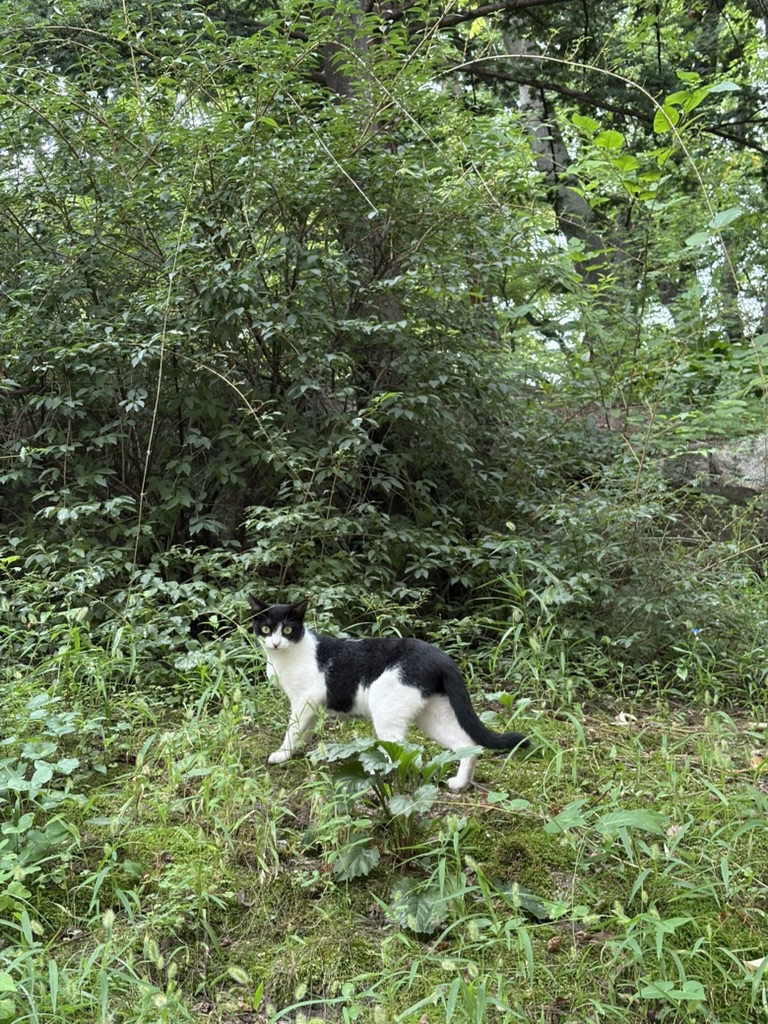
When I got a little closer, it darted into the bushes as if it were running away. It was a cat that was afraid of people.
Looking in the opposite direction, I noticed the back of Seokjojeon. Even the pipes are perfectly symmetrical.
Once again, I had the cat to thank for an unexpected discovery.
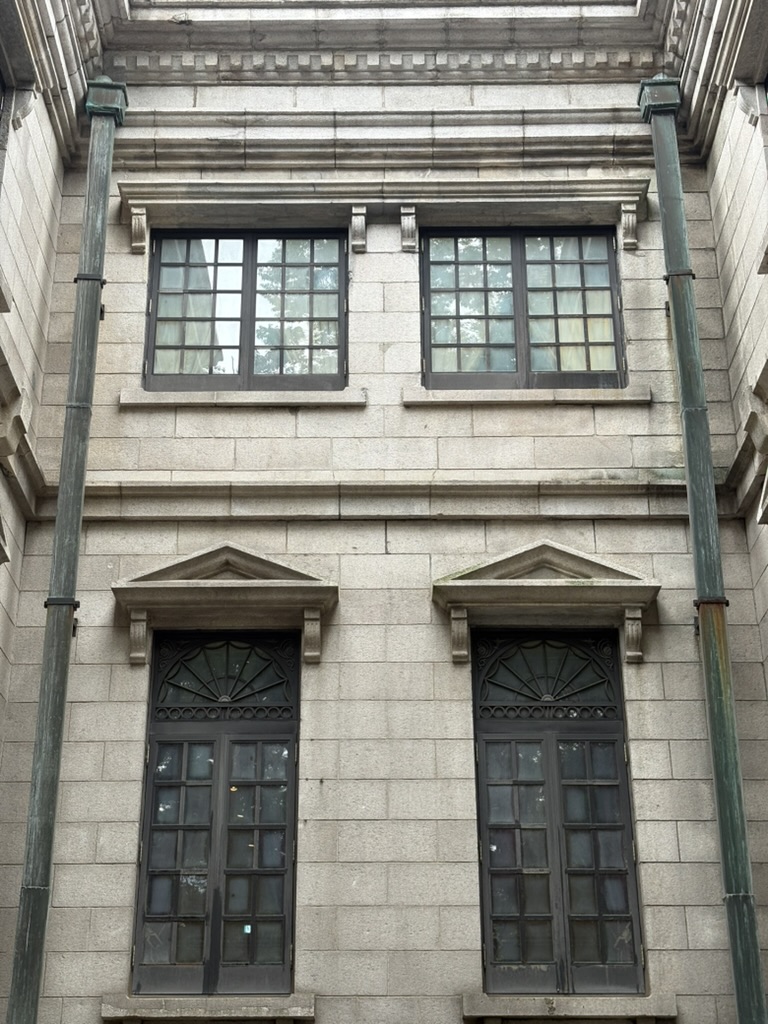
I continued along the walking path.
Then I ran into the same cat again. This time, it was sitting under a tree to escape the heat.
It stared at me again, with one paw stretched forward as if it could run away at any moment. Fine. I’ll leave first this time.
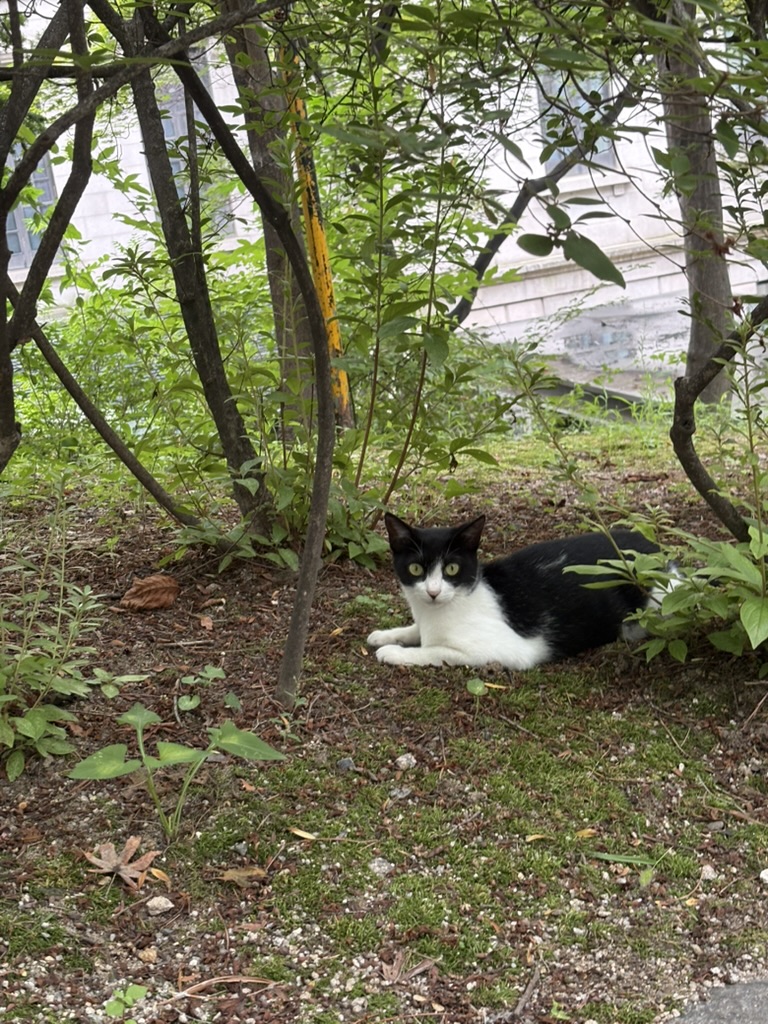
This is my favorite path in Deoksugung Palace.
The path runs between tall trees, with the palace buildings visible on the right. It makes me feel as if I’m walking through a hidden part of the palace.
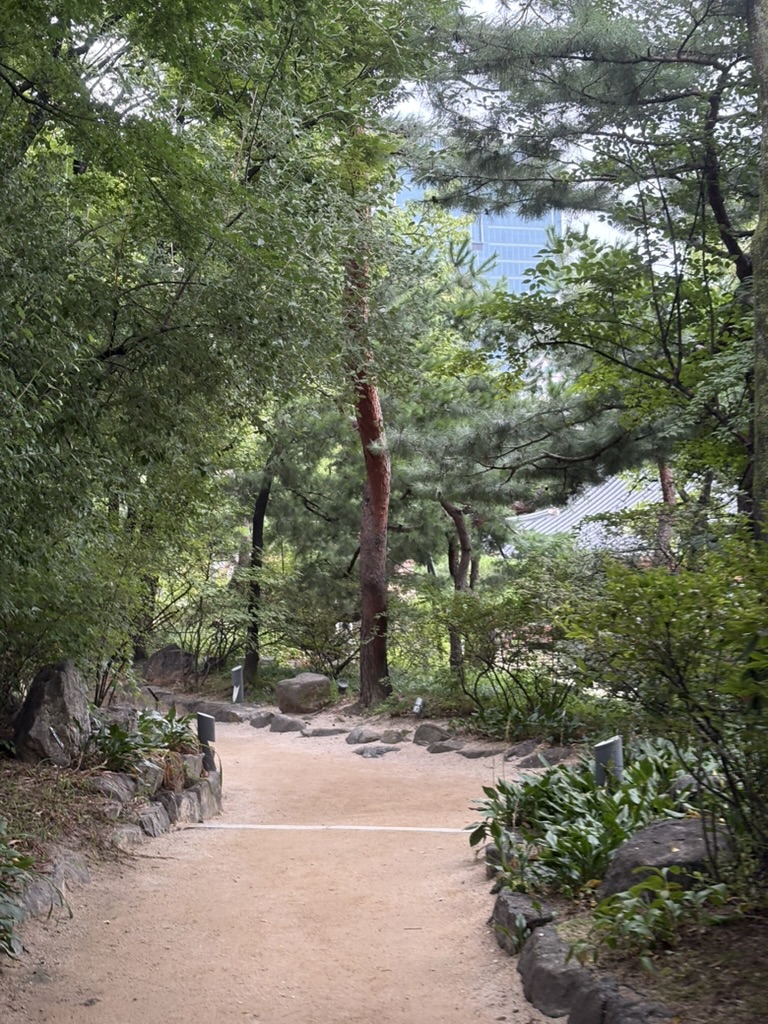
Following the path, you can see Seogeodang, Jeonggwanheon, Junghwajeon, and other buildings.
With my back to Junghwajeon, I looked back at the fountain and the National Museum of Modern and Contemporary Art, where I had just seen the exhibition.
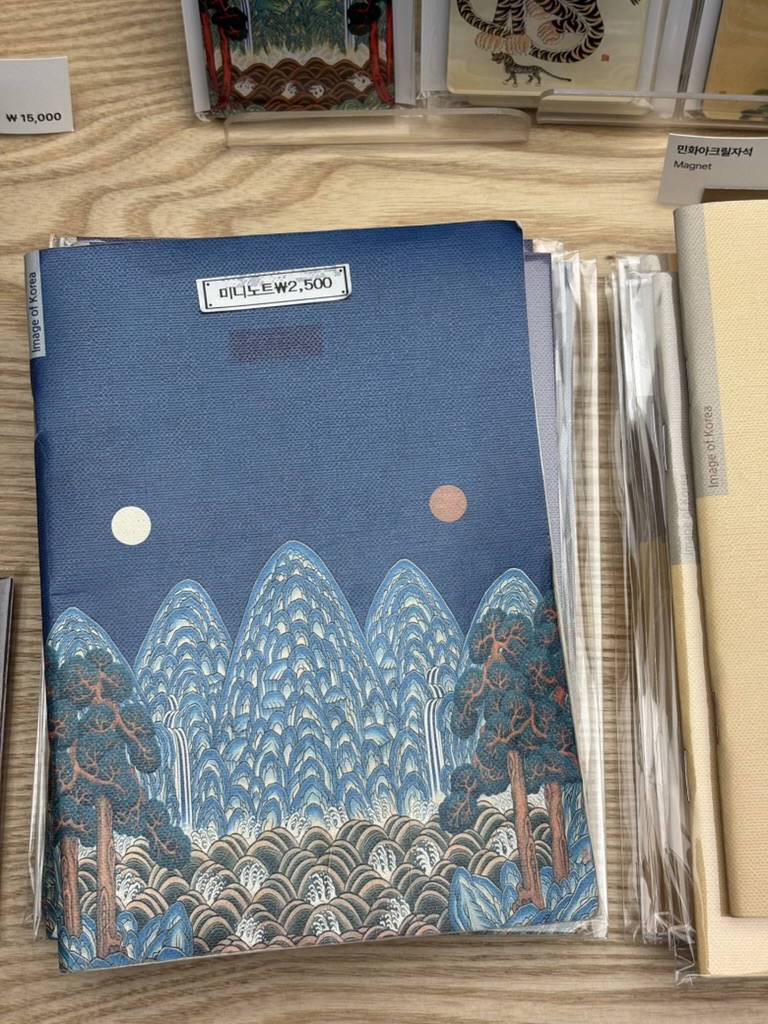
Finally, I stopped by a café and souvenir shop.
I saw a notebook and almost bought it, but then I thought about all the other notebooks sitting unused in a drawer at home without a single word written in them. So I resisted.
For just 1,000 won to enter Deoksugung Palace and another 2,000 won for the museum, I got to see plenty of things and had a great time walking around.
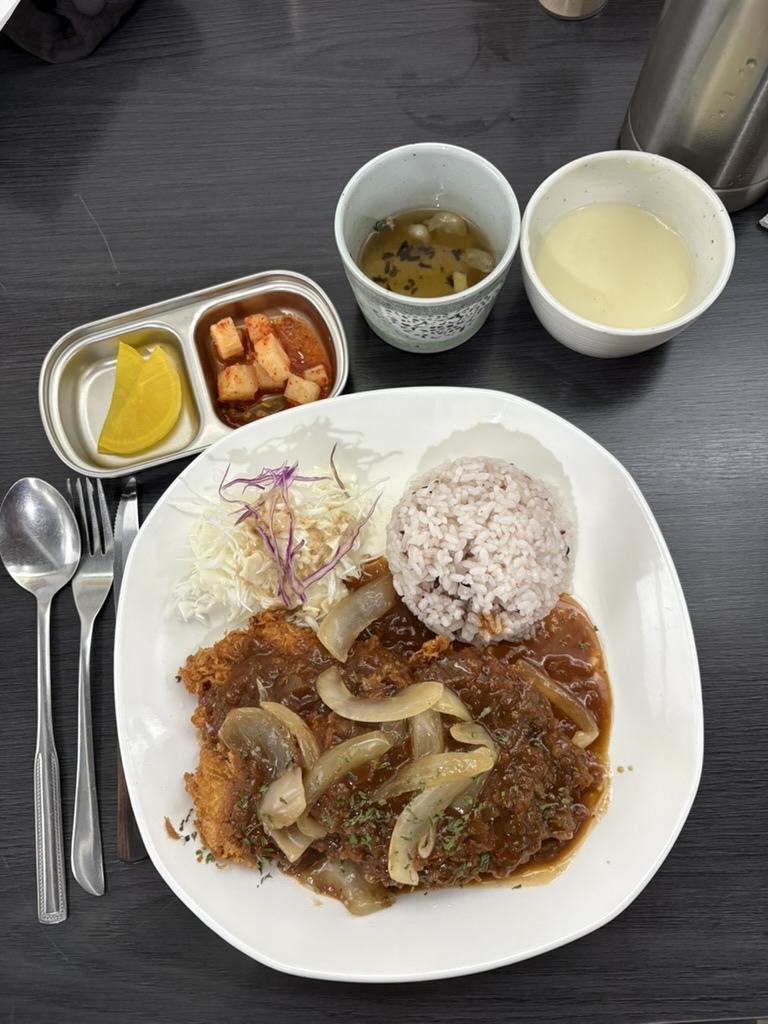
My stomach started growling for food, so I went into a restaurant in the basement of a nearby building and ordered tonkatsu.
Route: City Hall Station Exit 12 → Deoksugung Palace’s Seokjojeon, Dondeokjeon, National Museum of Modern and Contemporary Art → [Seoul City Hall Seosomun Building] → Seoul Museum of Art → Pai Chai University History Museum → Deoksugung Palace’s Jungmyeongjeon → Jeongdong-gil → Former Russian Legation → Gojong’s Road → Cecilmaru Observatory at Jeongdong Theater
Now it’s time to visit the Seoul City Hall Seosomun Building. Part of the 13th floor is open to the public as an observatory, and no reservation is required.
There is a separate entrance for visitors. I took the elevator up and arrived at the observatory.
This is Deoksugung Palace and the National Museum of Modern and Contemporary Art, Deoksugung, as seen from above.
Compared to the size of the palace, the people below look tiny, almost like specks of dust. It made me realize just how large Junghwajeon actually is.
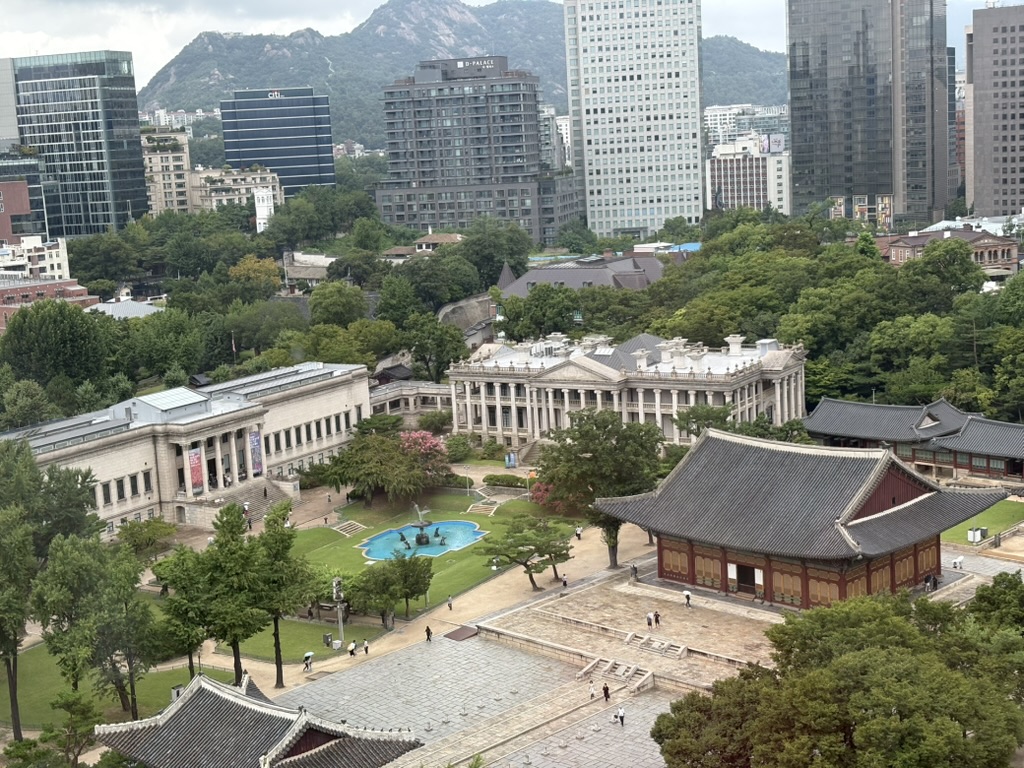
Behind Deoksugung Palace, you can see the Jeongdong Theater and Seoul Anglican Cathedral.
I’ll be going up to the observatory there later to take in the view.
I didn’t capture it in a photo, but you could also see Sejong-daero and Gyeongbokgung Palace from the observatory.
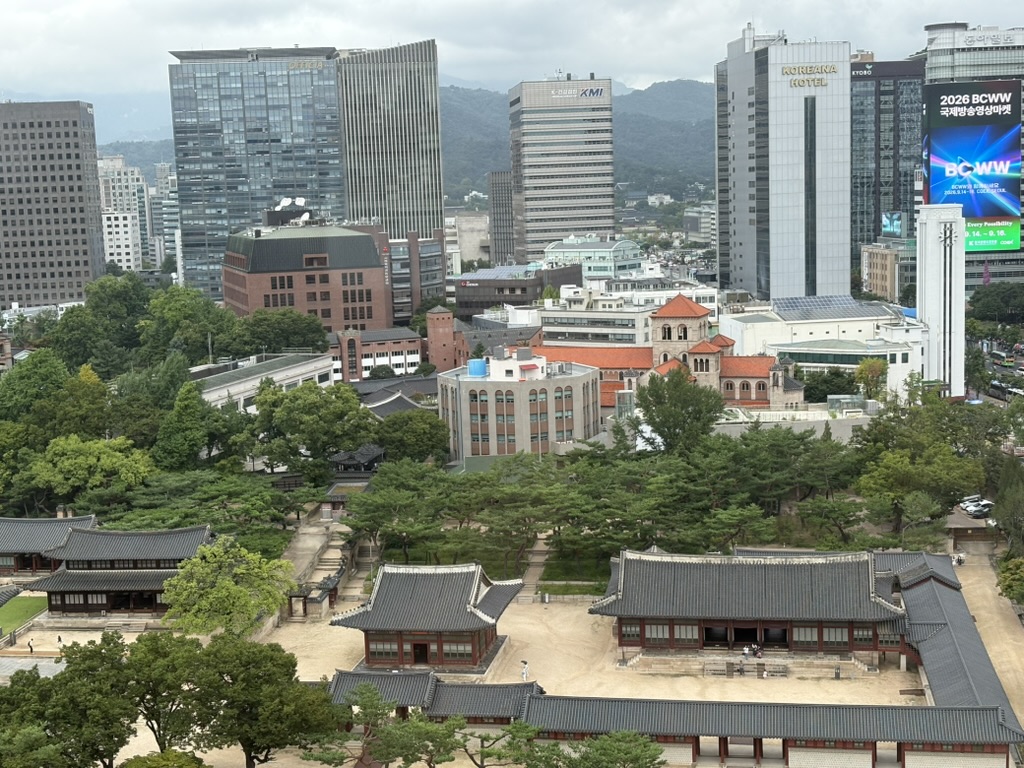
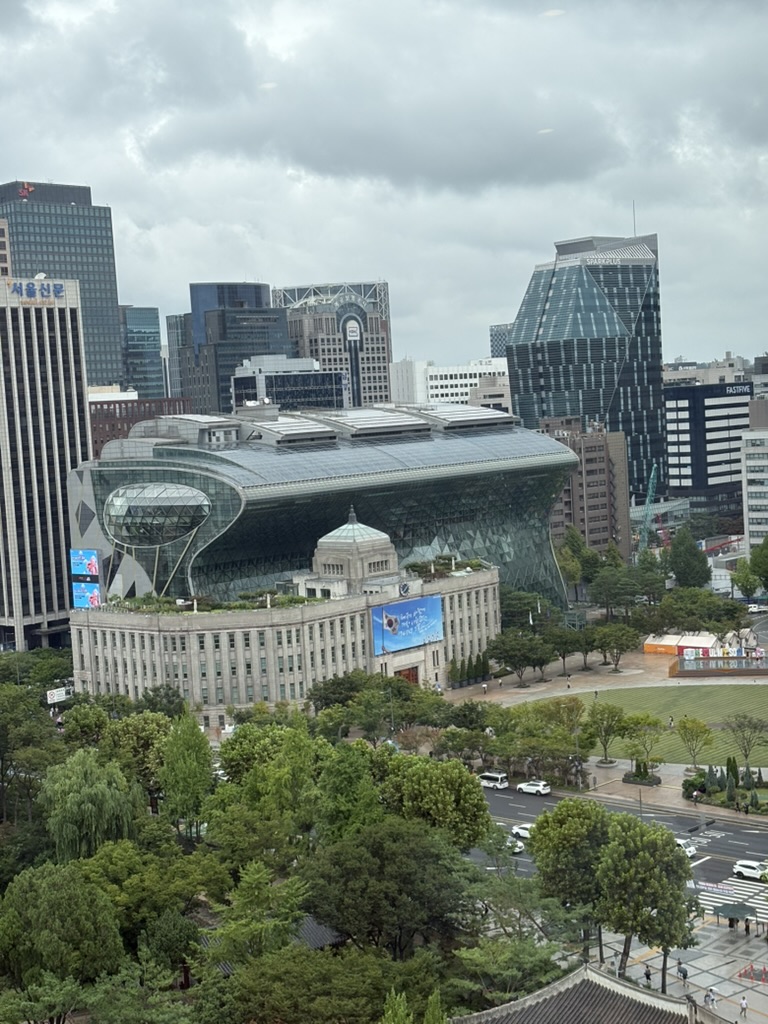
This is Seoul City Hall’s main building as seen from the Seosomun Building. I’m planning to go up to the observatory there as well.
In front of it are Seoul Library, the former City Hall building, and Seoul Plaza.
I was curious why the exterior of the main City Hall building was designed the way it was, so I looked it up. I wondered if strict restrictions such as height limits and regulations concerning cultural heritage sites had influenced the design.
Even so, it doesn’t blend particularly well with the surrounding buildings, and honestly, I think the building itself is ugly.
Route: City Hall Station Exit 12 → Deoksugung Palace’s Seokjojeon, Dondeokjeon, National Museum of Modern and Contemporary Art → Seoul City Hall Seosomun Building → [Seoul Museum of Art] → Pai Chai University History Museum → Deoksugung Palace’s Jungmyeongjeon → Jeongdong-gil → Former Russian Legation → Gojong’s Road → Cecilmaru Observatory at Jeongdong Theater
After leaving the Seosomun Building, I walked along Deoksugung-gil, which is also famous for its stone-wall road.
Following the road, I reached an intersection. Just inside it was the Seoul Museum of Art.
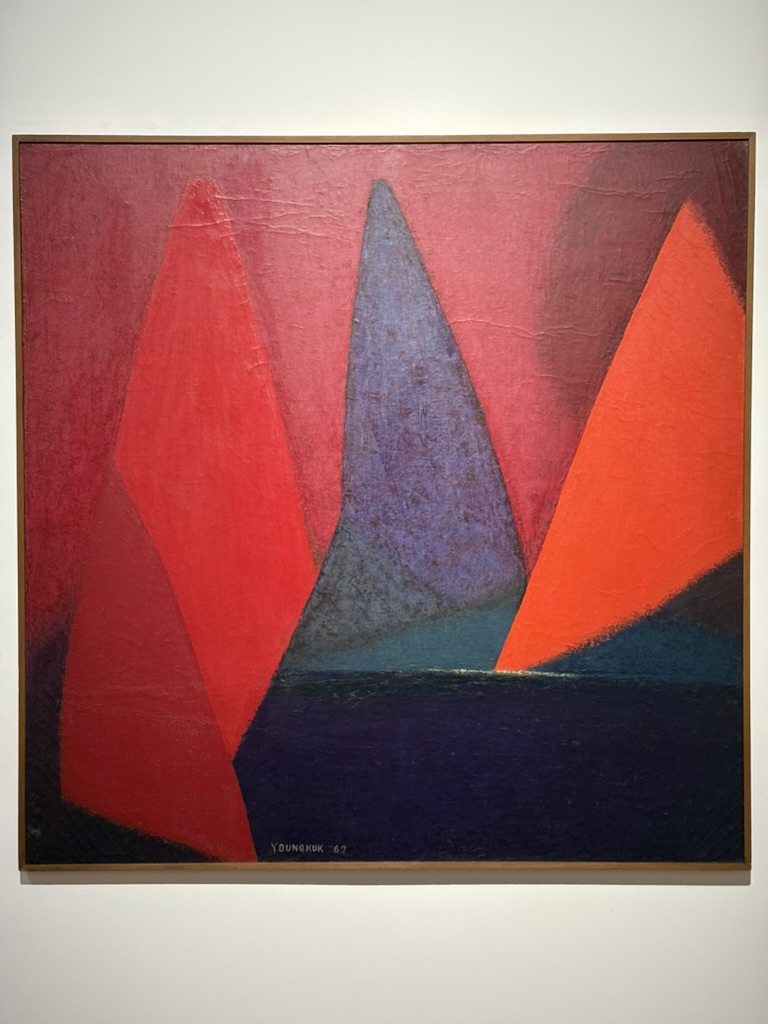
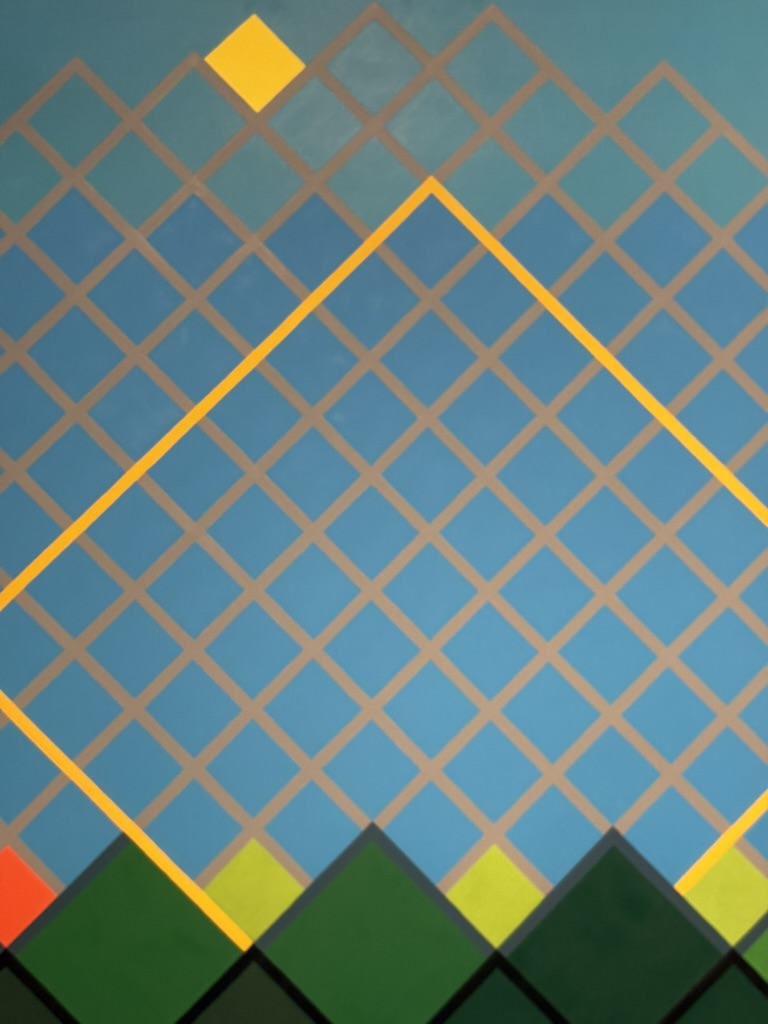
The museum is currently hosting Yoo Youngkuk: The Mountain Is Within Me, The Base of Technology: Scenes at the Boundary, and The Origin of Love.
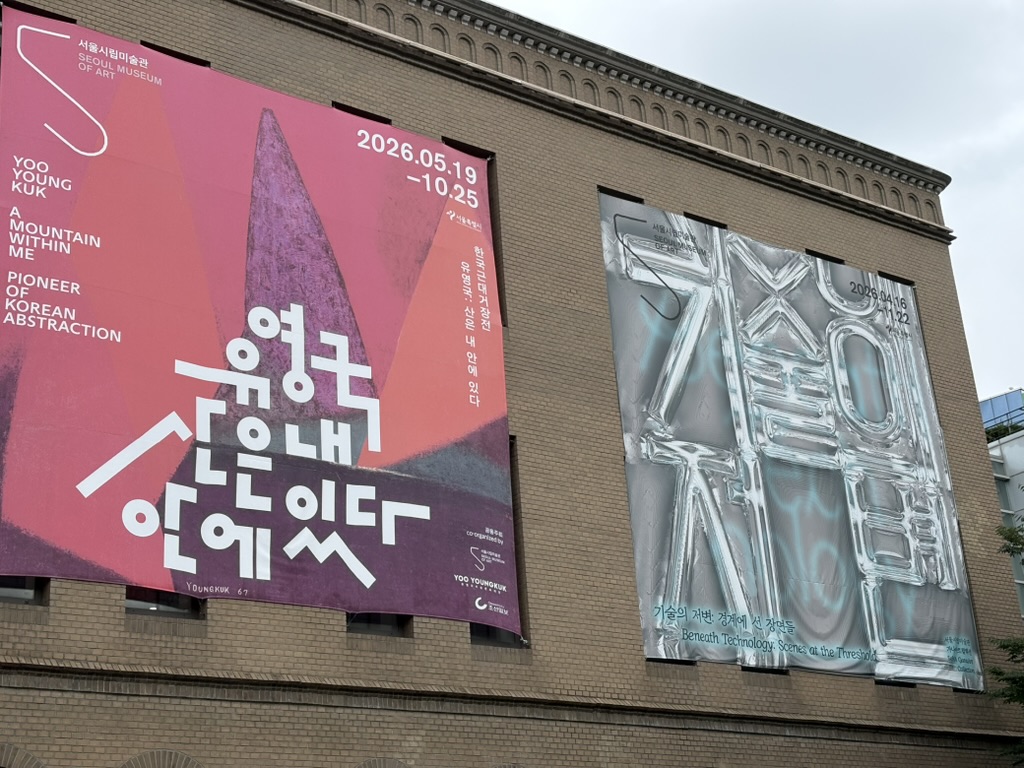
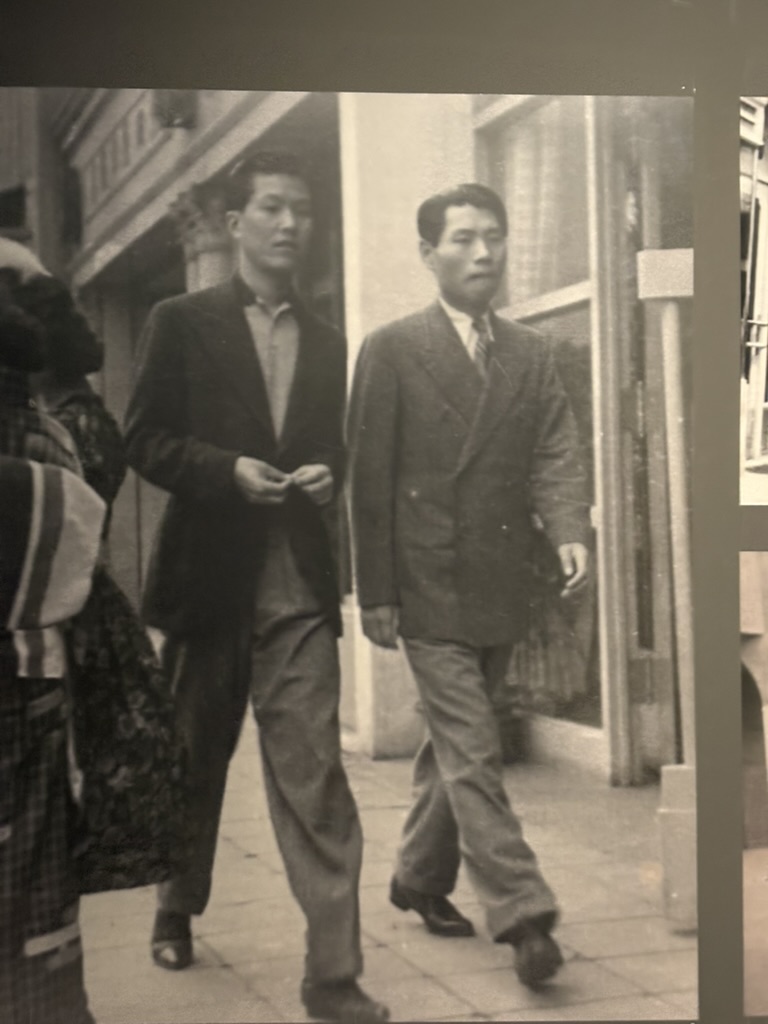
Yoo Youngkuk was a schoolmate of Lee Dae-won, whose exhibition I had just seen at the National Museum of Modern and Contemporary Art, Deoksugung. Both of them studied under Sato Kunio.
There was a photograph hanging in one corner of the exhibition hall. Yoo Youngkuk is on the left, and Kim Whanki is on the right, walking down a street.
I found myself wishing that the clothes people wore in those days would become fashionable again someday.
Like the Lee Dae-won exhibition, the exhibition was organized into sections according to different periods. You could see how Yoo Youngkuk’s approach to painting changed over time.
His early geometric forms gradually became more restrained compositions of triangles, straight lines, and diamonds, while the rough textures gave way to smoother ones.
Route: City Hall Station Exit 12 → Deoksugung Palace’s Seokjojeon, Dondeokjeon, National Museum of Modern and Contemporary Art → Seoul City Hall Seosomun Building → Seoul Museum of Art → [Pai Chai University History Museum] → Deoksugung Palace’s Jungmyeongjeon → Jeongdong-gil → Former Russian Legation → Gojong’s Road → Cecilmaru Observatory at Jeongdong Theater
After looking through the exhibitions on each floor, I left the museum. Taking the road on the left leads to the Pai Chai University History Museum.
Here is Pai Chai University as seen from the front. Looking at it now, I think I took the photo too close to capture the whole building.
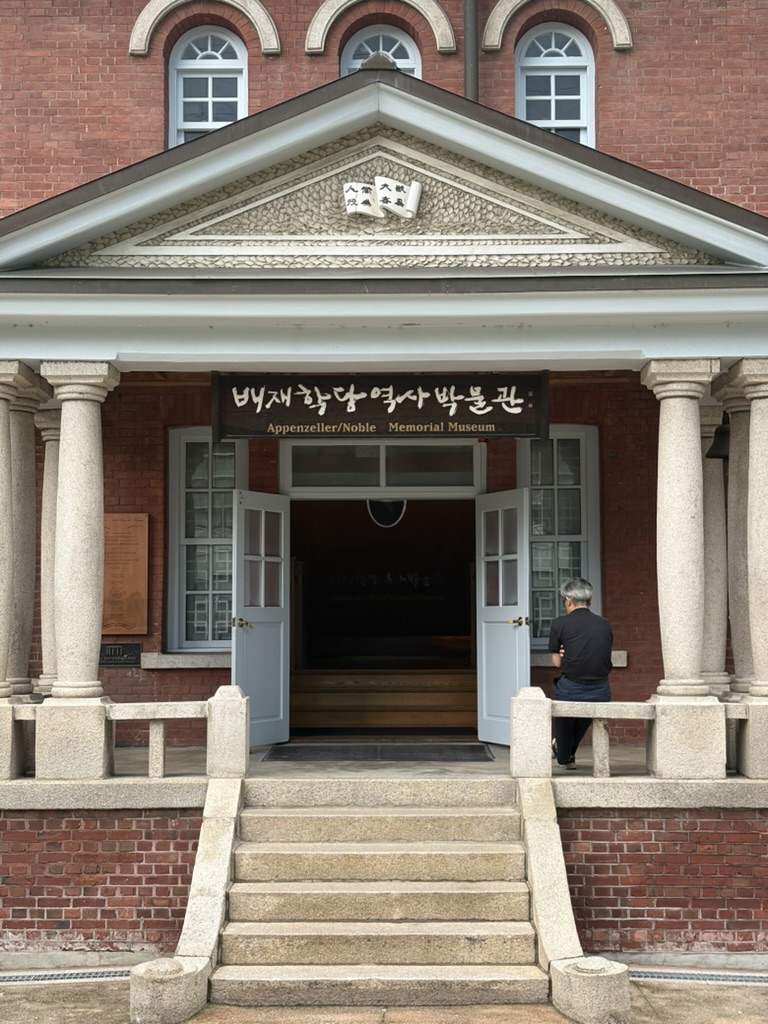
Pai Chai Hakdang was Korea’s first modern educational institution, founded by the American missionary Henry Appenzeller during the reign of King Gojong.
I learned from the exhibition here that the word “Baehje” means “a place where useful people are raised and educated.”
Historical figures such as Ju Si-gyeong, Syngman Rhee, Korea’s first president, and poet Kim So-wol all graduated from Pai Chai Hakdang.
Leaving the museum and turning left brings me back to the intersection where I entered the Seoul Museum of Art earlier. I then took the road next to the Jeongdong Theater.
Route: City Hall Station Exit 12 → Deoksugung Palace’s Seokjojeon, Dondeokjeon, National Museum of Modern and Contemporary Art → Seoul City Hall Seosomun Building → Seoul Museum of Art → Pai Chai University History Museum → [Deoksugung Palace’s Jungmyeongjeon] → Jeongdong-gil → Former Russian Legation → Gojong’s Road → Cecilmaru Observatory at Jeongdong Theater
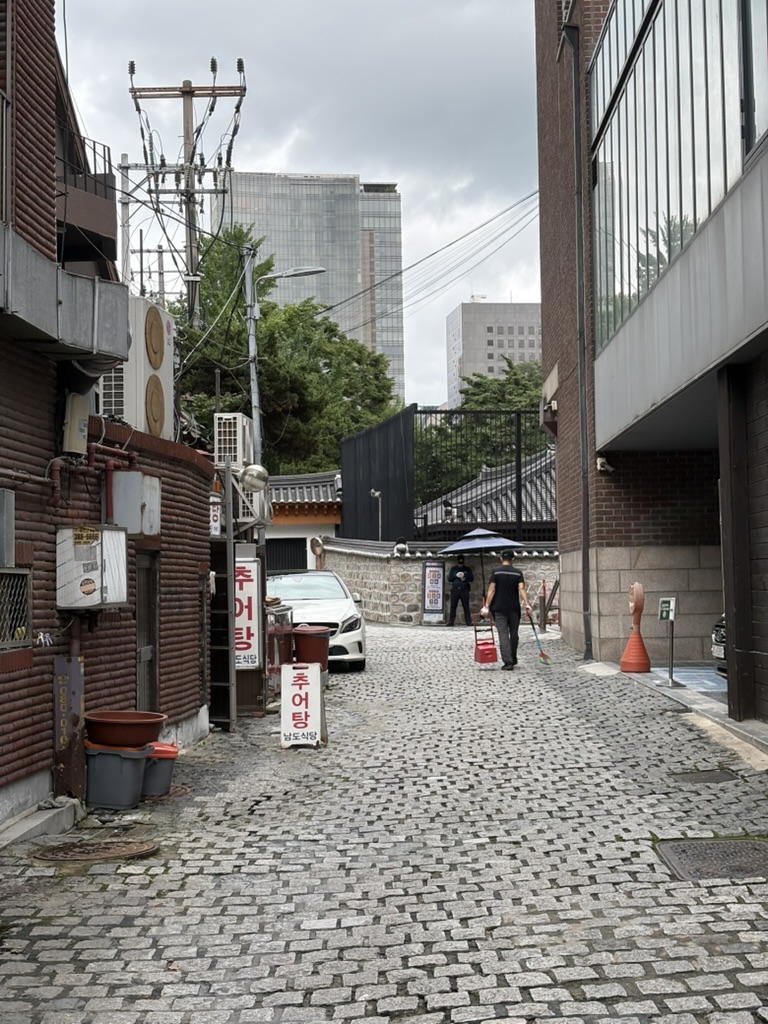
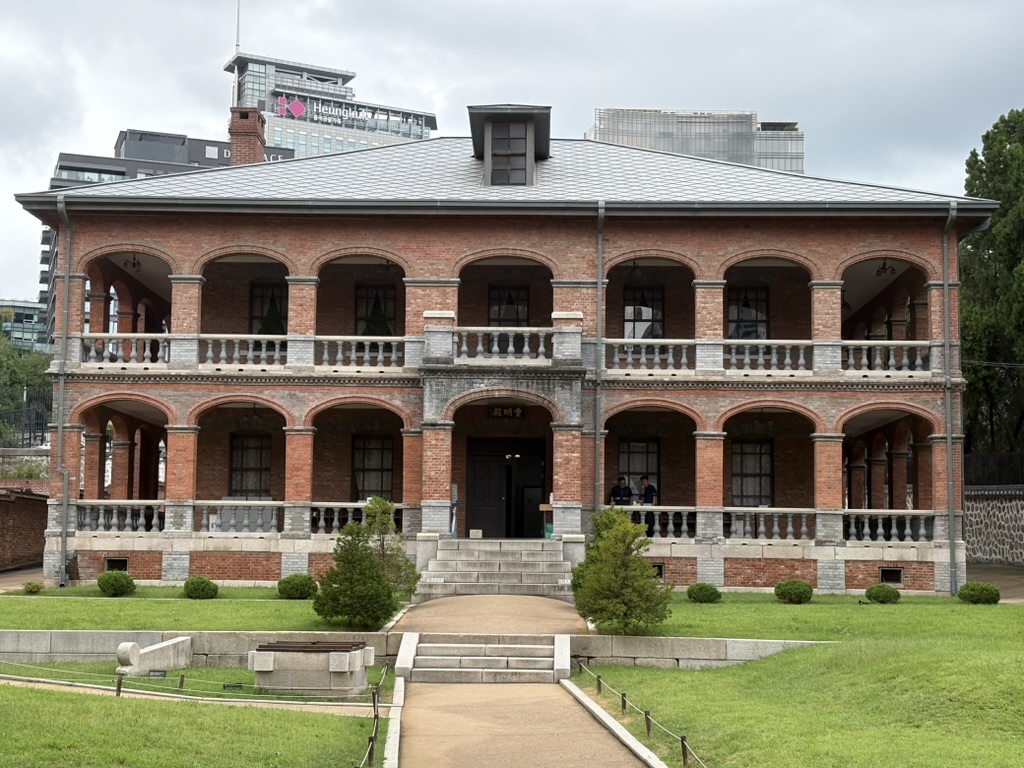
Following the road beside the Jeongdong Theater brings you to Jungmyeongjeon.
Jungmyeongjeon was where Ito Hirobumi and the Five Eulsa Traitors signed the Eulsa Treaty in 1905. It was also where Gojong arranged for the Hague Secret Emissaries to be sent.
In 1904, a major fire broke out at Deoksugung Palace, then known as Gyeongungung. King Gojong moved into a library called Suokheon, where he lived and conducted state affairs. The building was later renamed Jungmyeongjeon.
Gojong opposed the treaty until the very end, but it was forced upon him. The interior exhibition explains what happened during the signing of the treaty.
At the time, Japan took away the Korean Empire’s diplomatic rights under the pretext of “protecting” it and established the Japanese Residency-General to control its administration. Ito Hirobumi became its first Resident-General.
Route: City Hall Station Exit 12 → Deoksugung Palace’s Seokjojeon, Dondeokjeon, National Museum of Modern and Contemporary Art → Seoul City Hall Seosomun Building → Seoul Museum of Art → Pai Chai University History Museum → Deoksugung Palace’s Jungmyeongjeon → [Jeongdong-gil] → Former Russian Legation → Gojong’s Road → Cecilmaru Observatory at Jeongdong Theater
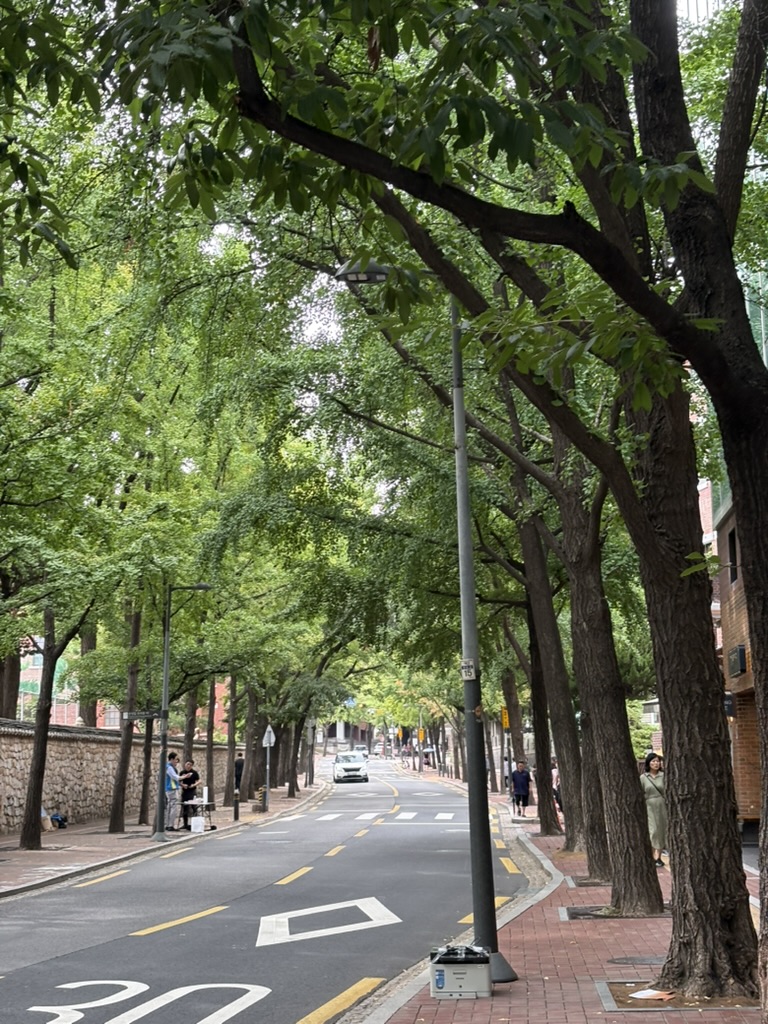
After leaving Jungmyeongjeon, I walked along Jeongdong-gil.
Fresh green leaves hung from the branches. There wasn’t a single fallen leaf along the road.
The street is lined with restaurants and cafés with a nice atmosphere. It’s still humid and hot, so I imagine people can only comfortably eat outdoors after the sun goes down.
Route: City Hall Station Exit 12 → Deoksugung Palace’s Seokjojeon, Dondeokjeon, National Museum of Modern and Contemporary Art → Seoul City Hall Seosomun Building → Seoul Museum of Art → Pai Chai University History Museum → Deoksugung Palace’s Jungmyeongjeon → Jeongdong-gil → [Former Russian Legation] → Gojong’s Road → Cecilmaru Observatory at Jeongdong Theater
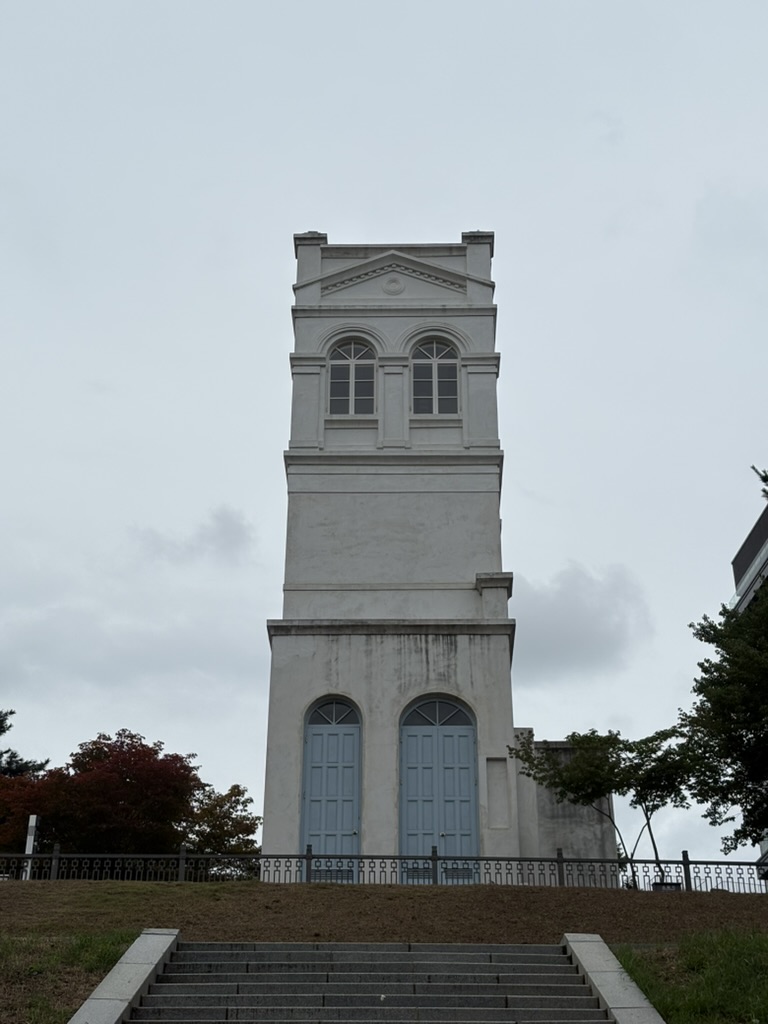
Walking along Jeongdong-gil, I came across Yewon School. There is a road beside the school.
That road leads to Jeongdong Historical Park. The Former Russian Legation stands above the park.
This is where King Gojong moved after leaving Gyeongbokgung Palace in 1896 because he felt threatened following the assassination of Empress Myeongseong. This event is known as the Agwan Pacheon, or Gojong’s refuge at the Russian Legation.
A year later, Gojong returned to Deoksugung Palace and established the Korean Empire, declaring its independence in an effort to free the country from foreign interference.
Walking around a place where such important moments in history took place makes me feel strangely dignified.
Route: City Hall Station Exit 12 → Deoksugung Palace’s Seokjojeon, Dondeokjeon, National Museum of Modern and Contemporary Art → Seoul City Hall Seosomun Building → Seoul Museum of Art → Pai Chai University History Museum → Deoksugung Palace’s Jungmyeongjeon → Jeongdong-gil → Former Russian Legation → [Gojong’s Road] → Cecilmaru Observatory at Jeongdong Theater
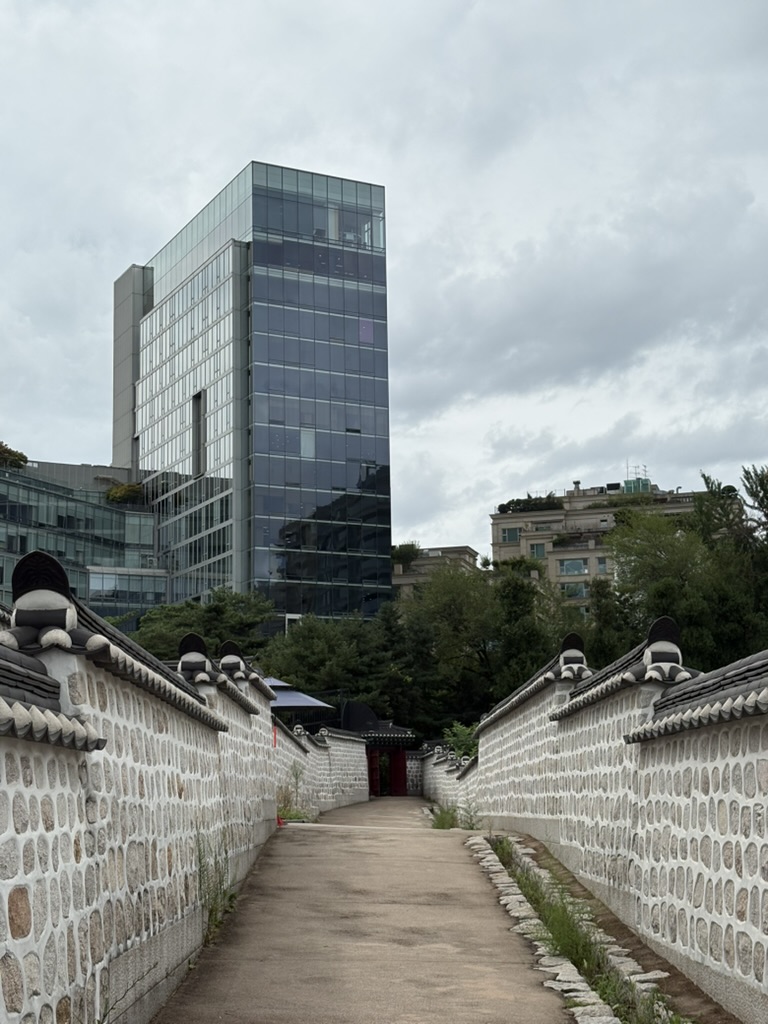
Walking up the road beside the Former Russian Legation, I came across a gate. Crossing through it marks the beginning of Gojong’s Road.
It is called Gojong’s Road because it is believed to have been used by King Gojong to travel between the Russian Legation, where he stayed after the Agwan Pacheon, and Deoksugung Palace.
After walking along Gojong’s Road, I reached the Seonwonjeon area of Deoksugung Palace.
Restoration work is currently underway.
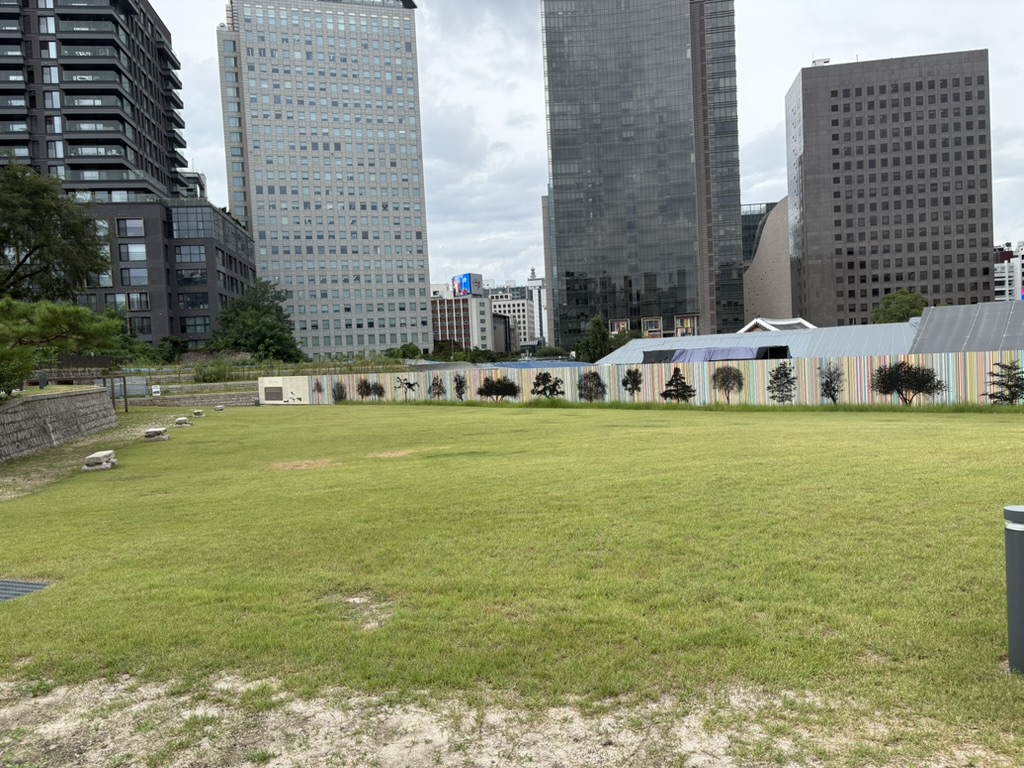
There is a three-way intersection in front of the Seonwonjeon area.
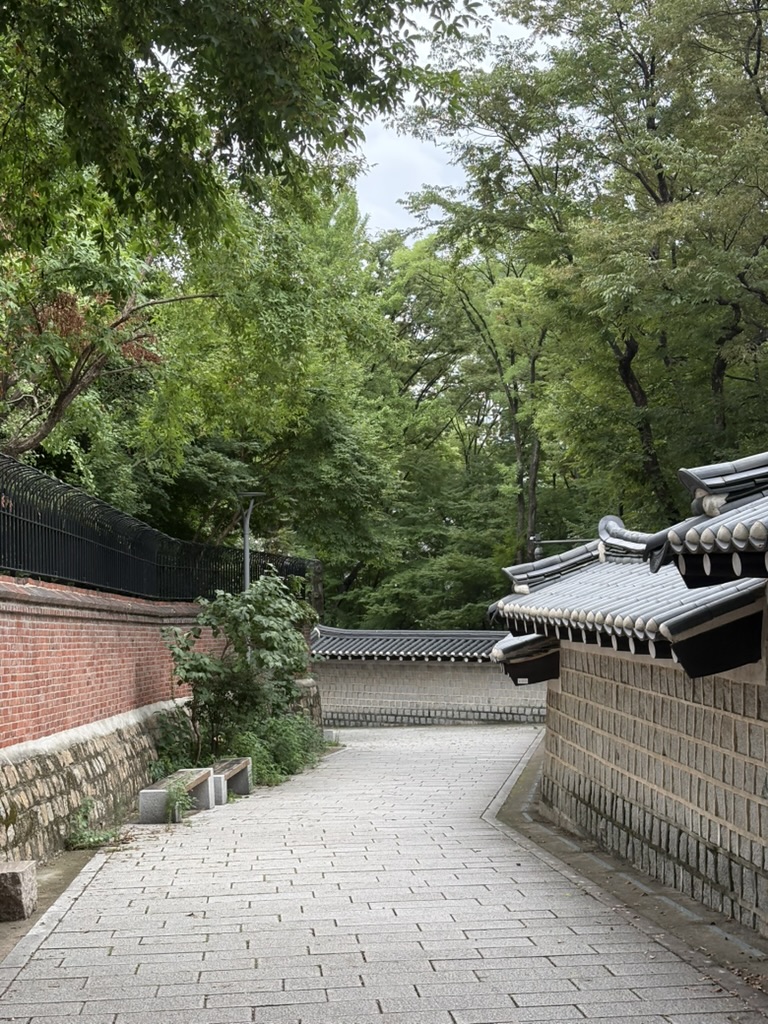
Going straight leads to another section of Deoksugung’s stone-wall road. It has a different charm from the stone-wall road leading toward the Seoul Museum of Art.
For years, access to this road was restricted because it ran alongside the grounds of the British Embassy. It has now been about ten years since it was opened to the public.
The British Embassy is on the left, and Deoksugung Palace is on the right.
Route: City Hall Station Exit 12 → Deoksugung Palace’s Seokjojeon, Dondeokjeon, National Museum of Modern and Contemporary Art → Seoul City Hall Seosomun Building → Seoul Museum of Art → Pai Chai University History Museum → Deoksugung Palace’s Jungmyeongjeon → Jeongdong-gil → Former Russian Legation → Gojong’s Road → [Cecilmaru Observatory at Jeongdong Theater]
Strangely enough, this road ends at the entrance to Deoksugung Palace. Because the British Embassy occupies the area, the road leading outside is blocked, so you have to take the back path through the palace grounds.
There is a temporary passage next to the path where I encountered the cat earlier.
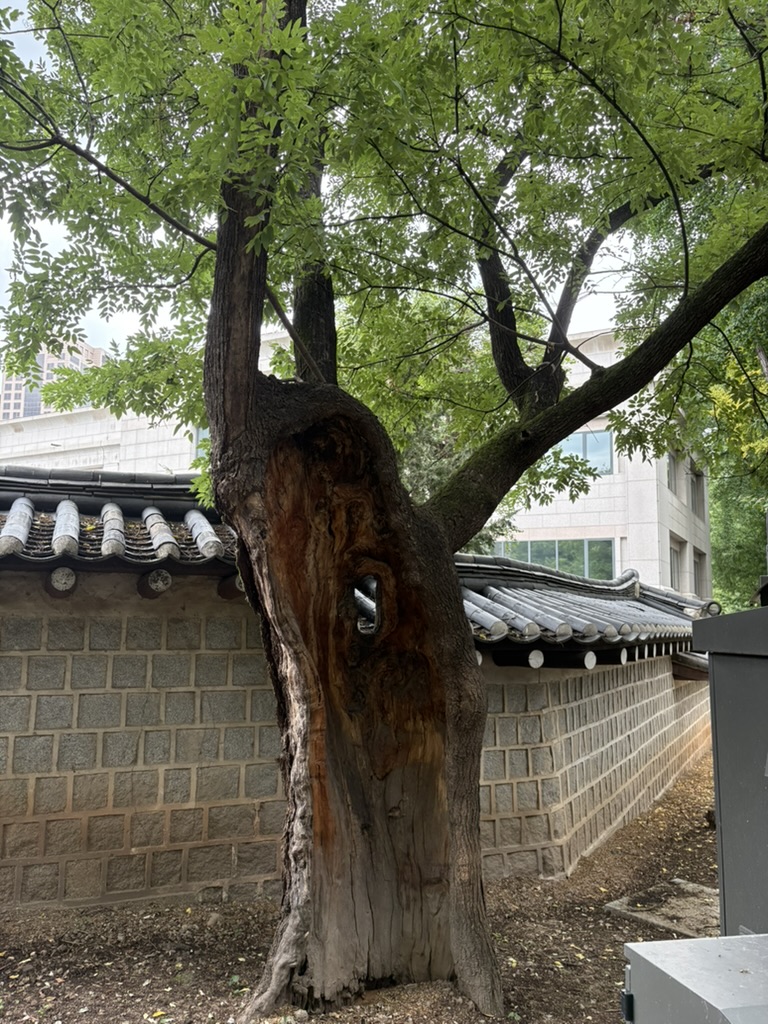
I came across a tree with a strangely hollow center. It looked like it had gone on an extreme diet. Maybe it had taken Mounjaro or something.
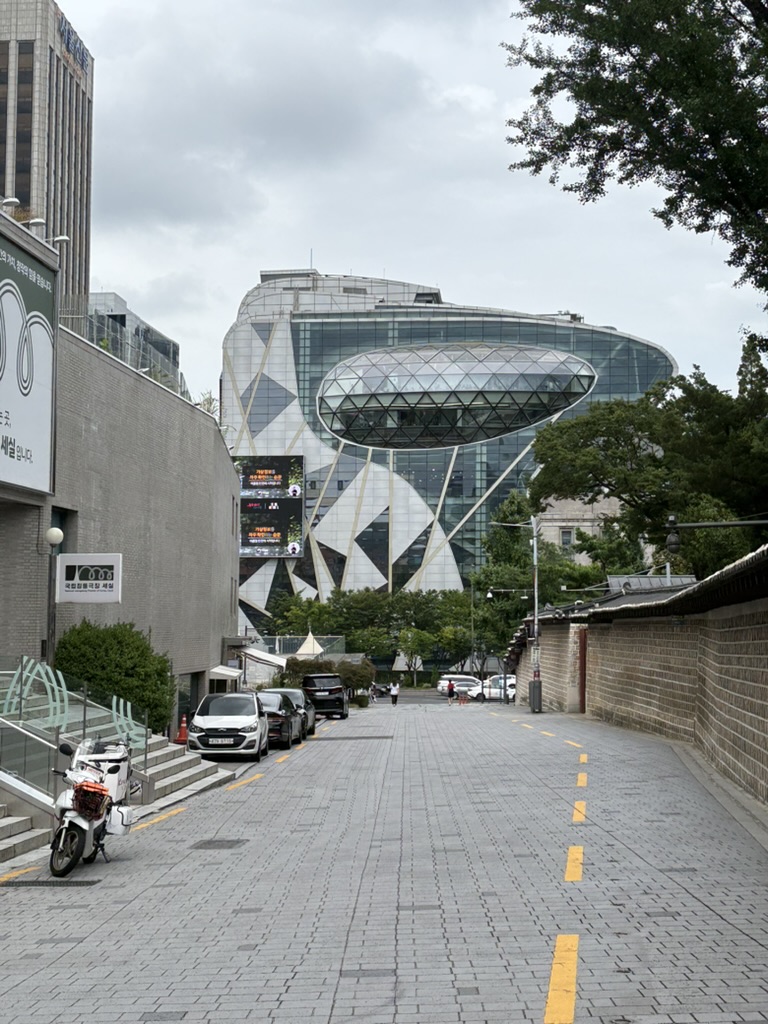
After leaving Deoksugung Palace again, I reached the road beside Jeongdong Theater’s Cecil building, where Seoul City Hall can be seen in the distance.
A little farther down, there is a random-looking elevator on the left. Taking it up leads to the rooftop observatory of Cecil Theater.
There is no admission fee, so you can visit without hesitation.
From the rooftop observatory, I took a photo of Seoul Anglican Cathedral.
I didn’t take a photo of it, but from here you can also see people at Seoul City Hall’s observatory and visitors walking around Deoksugung Palace.
Since this observatory is lower than the others, I found the view of the cathedral right next to it more interesting than the broader view of Seoul.
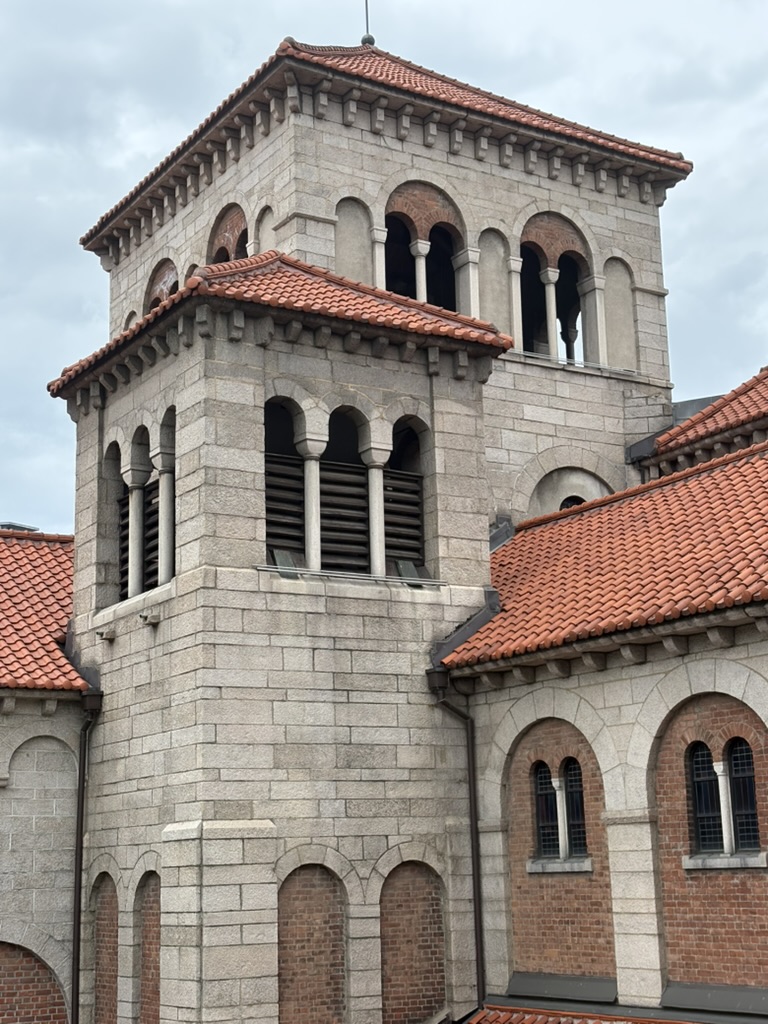
I had originally planned to visit the Seoul Urbanism & Architecture Exhibition Hall as well, but it seemed to be undergoing interior construction, so I turned around.
Now I’ll cross the street and head to Seoul City Hall.
Around Seoul City Hall
Route: [Seoul Plaza] → Seoul City Hall Sky Observatory, Sky Square Gallery, My Seoul → Wongudan
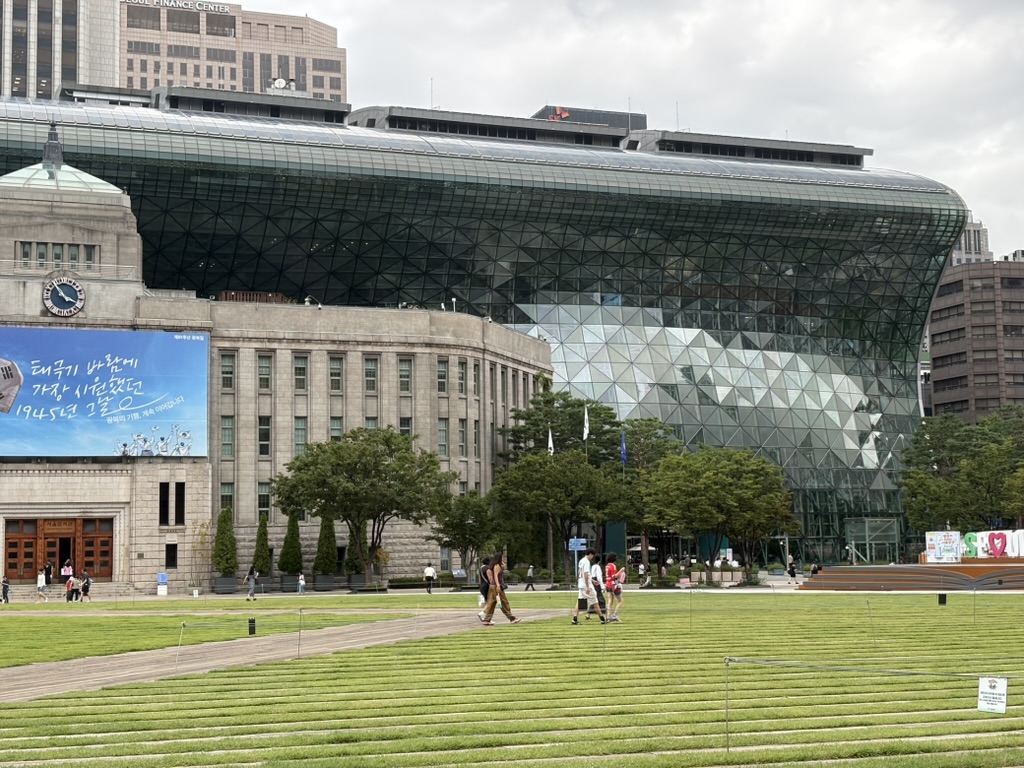
This is Seoul City Hall and Seoul Library as seen from Seoul Plaza. I’ll visit Seoul Library on my next walk.
Seoul Plaza was once the site of the road along the walls of Deoksugung Palace in 1910. A section of that road has been recreated here in the plaza.
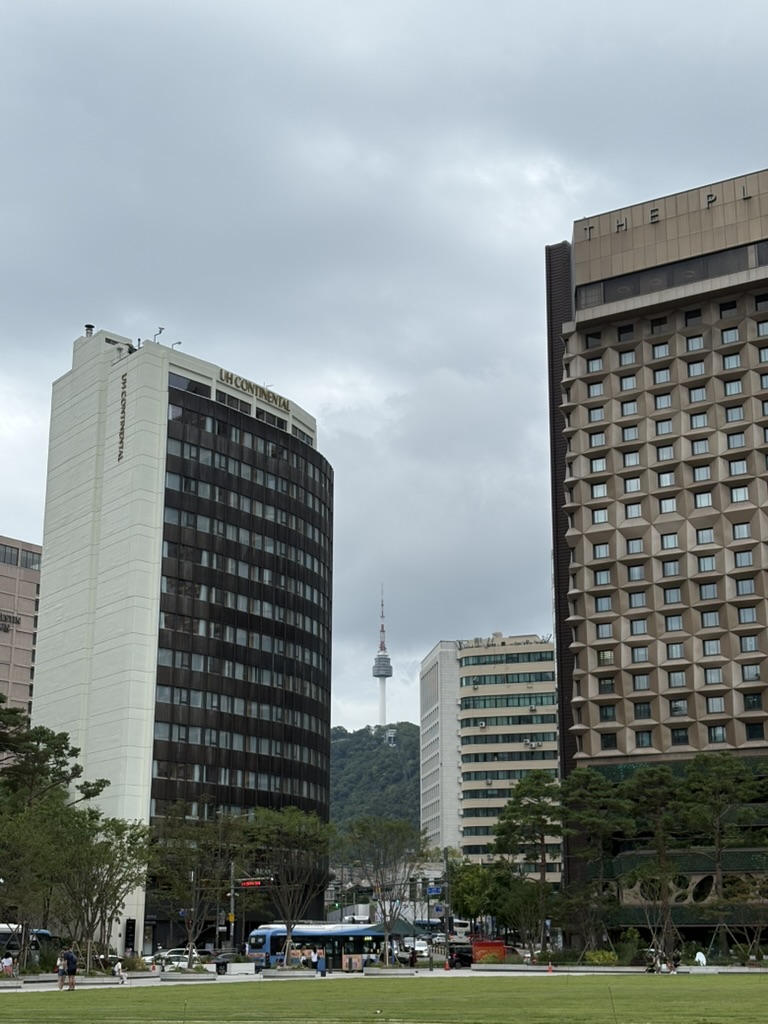
After passing through Seoul Plaza and reaching the front of Seoul Library, I turned around and saw Namsan Seoul Tower standing tall between The Plaza Hotel and Seoul Center Building.
Route: Seoul Plaza → [Seoul City Hall Sky Observatory], Sky Square Gallery, My Seoul → Wongudan
I entered Seoul City Hall. Although it is a workplace for city employees, there are also many spaces that are open to the public.
The 8th and 9th floors house the Sky Observatory and Sky Square Gallery. Just like at the Seosomun Building, I took a dedicated elevator to get there.
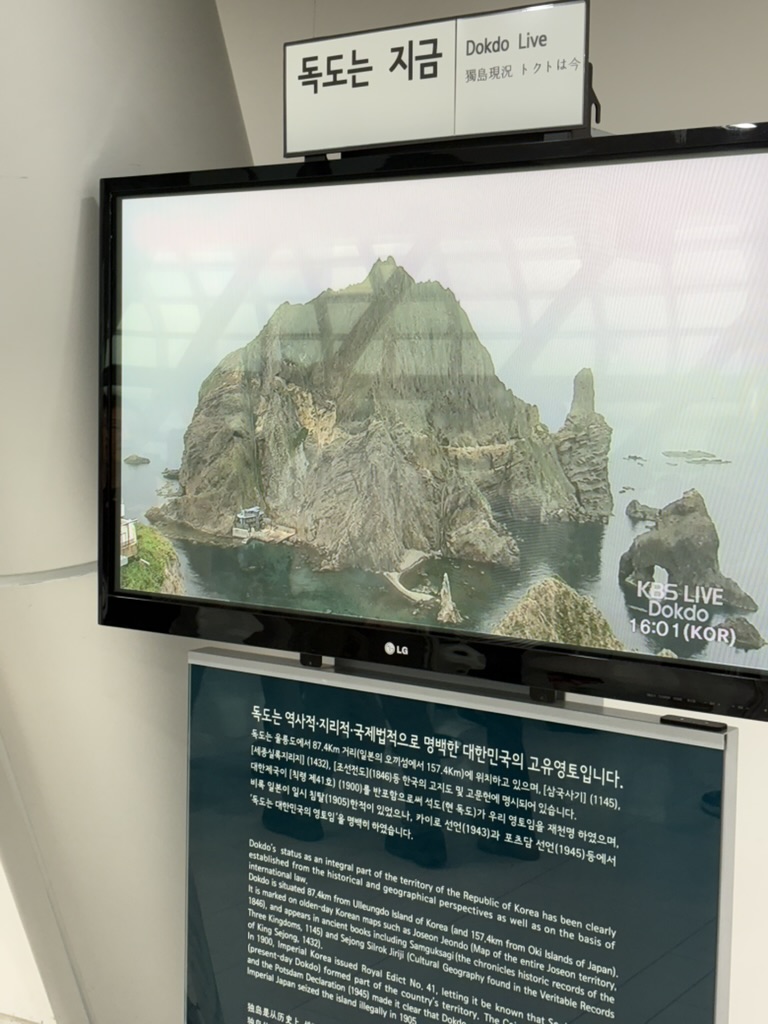
As soon as I arrived, a live broadcast of Dokdo was playing on a TV.
This is the Jeongdong Theater and Seoul Anglican Cathedral as seen from the Sky Observatory.
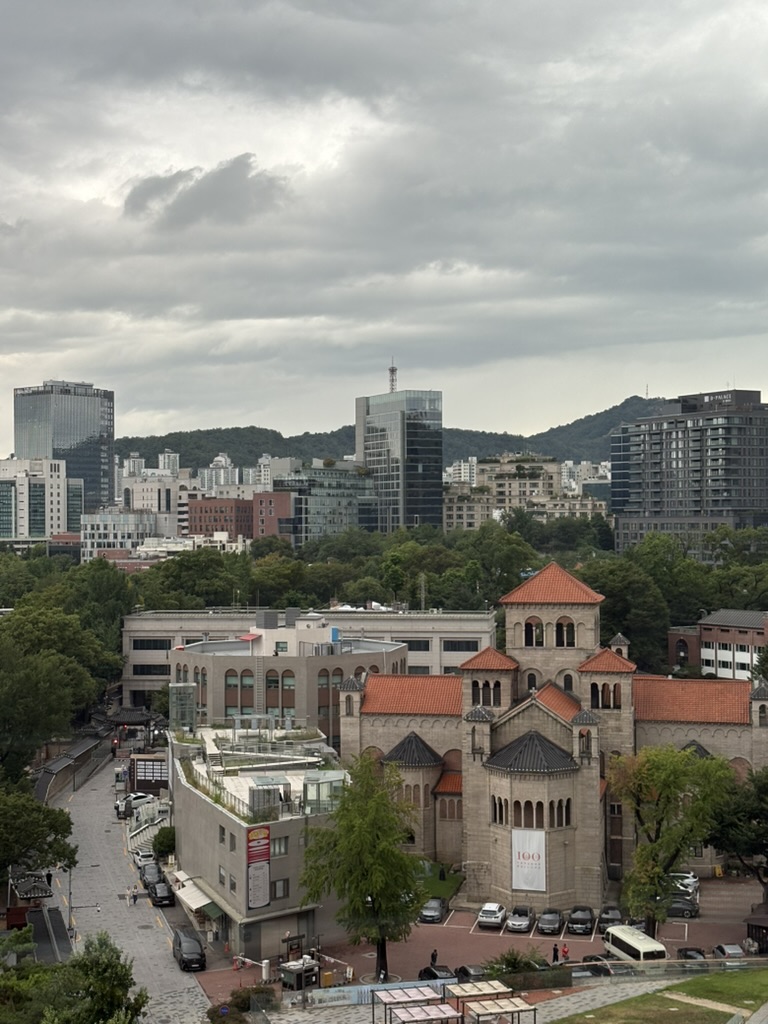
Deoksugung Palace and the National Museum of Modern and Contemporary Art are visible farther away.
The main City Hall building’s Sky Observatory offers a better view of the Jeongdong Theater and Seoul Anglican Cathedral, but the building’s exterior design blocks the view in places. So if you want to take in the whole area, I think the observatory at the Seosomun Building is better.
In particular, it’s difficult to get a good view of Seoul Plaza from the Sky Observatory.
For reference, Seoul Library also has an outdoor observatory.
I’ll have to visit it during my next walk around Jeong-dong and see what the view is like.
Route: Seoul Plaza → Seoul City Hall Sky Observatory, [Sky Square Gallery], My Seoul → Wongudan
Taking the stairs down to the 8th floor, I found an exhibition called Traces of Seoul.
It was an exhibition showing the small everyday scenes and landscapes of alleys that are gradually disappearing.
Seoul is a fascinating city. From the Joseon Dynasty and the modern era, through the Korean Empire and the Korean War, to the rapidly developing city of today, traces of its many different faces can still be found on its streets.
So far, I’ve walked through Seochon, Bukchon, and now Jeong-dong, seeing only small parts of what Seoul has to offer. There is still so much more to see.
There’s no need to be endlessly sad about things disappearing. Places are always changing. What we see now is simply one moment preserved within that change.
And perhaps that is precisely why we can appreciate it. Just as thinking about parting can make us realize how much we love someone.
Even after saying all that, I’m someone who has a hard time letting go, so I tend to feel a little sad about things that are passing by.
That’s why I started this project. I wanted to preserve the things I’ve seen through writing, photographs, and a few videos, so that I could look back on them someday.
Route: Seoul Plaza → Seoul City Hall Sky Observatory, Sky Square Gallery, [My Seoul] → Wongudan
After taking the elevator down from the Sky Observatory, I saw a place labeled “My Seoul” and “Seoul Gallery.”
Going down there, I found various public spaces, including a history exhibition hall, a bookstore, and a café.
The Seoul Bookstore was selling books about Seoul.
The books in the photo are Seoul Playbook 365, a guide to things to do in Seoul, and Seoul Mate 365, which tells stories about people.
There were also books about Seoul’s history, administration, and architecture, as well as books about individual neighborhoods such as Noryangjin and Mangu-dong.
I was getting thirsty and wanted something to drink when I came across a café.
It was labeled as an unmanned café, and I soon realized that it was a café where a robot makes the coffee. I was curious to see what kind of coffee a Seoul City Hall robot would make.
A vanilla latte made by a robot. Near the end of the video, the way it twists its whole body while mixing the latte was so oddly pathetic that it made me laugh.
I quickly finished my latte and headed to the My Seoul Gallery. This is a brand-new space that opened in February this year.
Gallery 1 introduces Seoul’s policies and features a scaled-down model of the entire city. Gallery 2 compares Seoul with major cities around the world and showcases its competitiveness.
The exhibits are much larger than they appear in the photos, so it was fun to look around.
The area around Seoul City Hall and Sillim-dong was surprisingly difficult to find because they are located near the center of the model.
Neighborhoods along the Han River, on the other hand, are easy to spot because they are close together. The Han River view shines even in miniature.
After leaving Seoul City Hall, I headed to Wongudan, the final stop of today’s walk.
Route: Seoul Plaza → Seoul City Hall Sky Observatory, Sky Square Gallery, My Seoul → [Wongudan]
Wongudan is next to Seoul Center Building, the same building I saw beside Namsan Seoul Tower earlier from Seoul Plaza.
Wongudan is a site where the emperor performed rituals to Heaven. Most of it was demolished by the Japanese Government-General of Korea, leaving only parts such as Hwangungwu and the three gates.
The stairs leading up to Hwangungwu were covered in various unexplained marks, almost like bruises. I didn’t particularly feel like taking a photo of them.
Above a small side gate near Hwangungwu, there is a painting of a dragon.
In the End
Today, I walked around Deoksugung Palace and Seoul City Hall.
It is an area filled with the history of the Korean Empire, with museums, old buildings, and quiet streets all gathered together.
As you walk through the city, you begin to realize that even places you’ve passed by without a second thought can hold more stories than you expected.
You might discover a new path. And once you do, that place begins to feel different from before. That’s the charm of taking a walk.
Everything I saw today will eventually disappear or change into something else. So perhaps simply being able to see it as it is now is valuable enough.
I’m looking forward to seeing what I’ll discover next time.
Goodbye.